
work life balance

Why Rest Feels Unsafe: The Psychology of Productivity and Self-Worth

Let’s pause and take a minute to reflect. When you sit down to rest, have you ever found yourself sitting down and feeling anxious, restless, or even feeling guilty?

Everything has been crossed off the “to do” list but still your mind continues racing.

Maybe you finally have a free afternoon but can't seem to enjoy it because you're already thinking about what needs to be done next.

I hear these same stentiments everyday and even have to manage these feelings within myself!

Many people struggling with burnout, chronic stress, anxiety, and nervous system exhaustion discover that rest doesn't feel restorative—it feels uncomfortable. From both psychological and astrological perspectives, this discomfort often points to deeper questions surrounding self-worth, identity, and our relationship with a culture of productivity.

When Productivity Becomes Identity

In our modern culture, busyness is often worn as a badge of honor and pride. We praise people for working harder, accomplishing more, and constantly striving toward the next goal. Ever heard the saying I’ll sleep when I die? That very idealogy is what perpetuates within all of us the feelings that we have to always be busy to be of value.

In the mental health world, we refer to this as conditional self-worth—the belief that we are valuable only when we are achieving, helping others, or meeting expectations. When self-worth becomes tied to performance, rest can feel threatening because it challenges the very foundation upon which we have built our identity. This way of thinking is particularly common among first born, caregivers, high achievers, entrepreneurs, and individuals who grew up feeling responsible for the emotional needs of others.

Why Rest Can Feel Unsafe

From a nervous system perspective, chronic stress changes the way the body functions. When we experience prolonged periods of uncertainty, trauma, caregiving responsibilities, financial pressure, or emotional overwhelm, the nervous system can become stuck in survival mode.
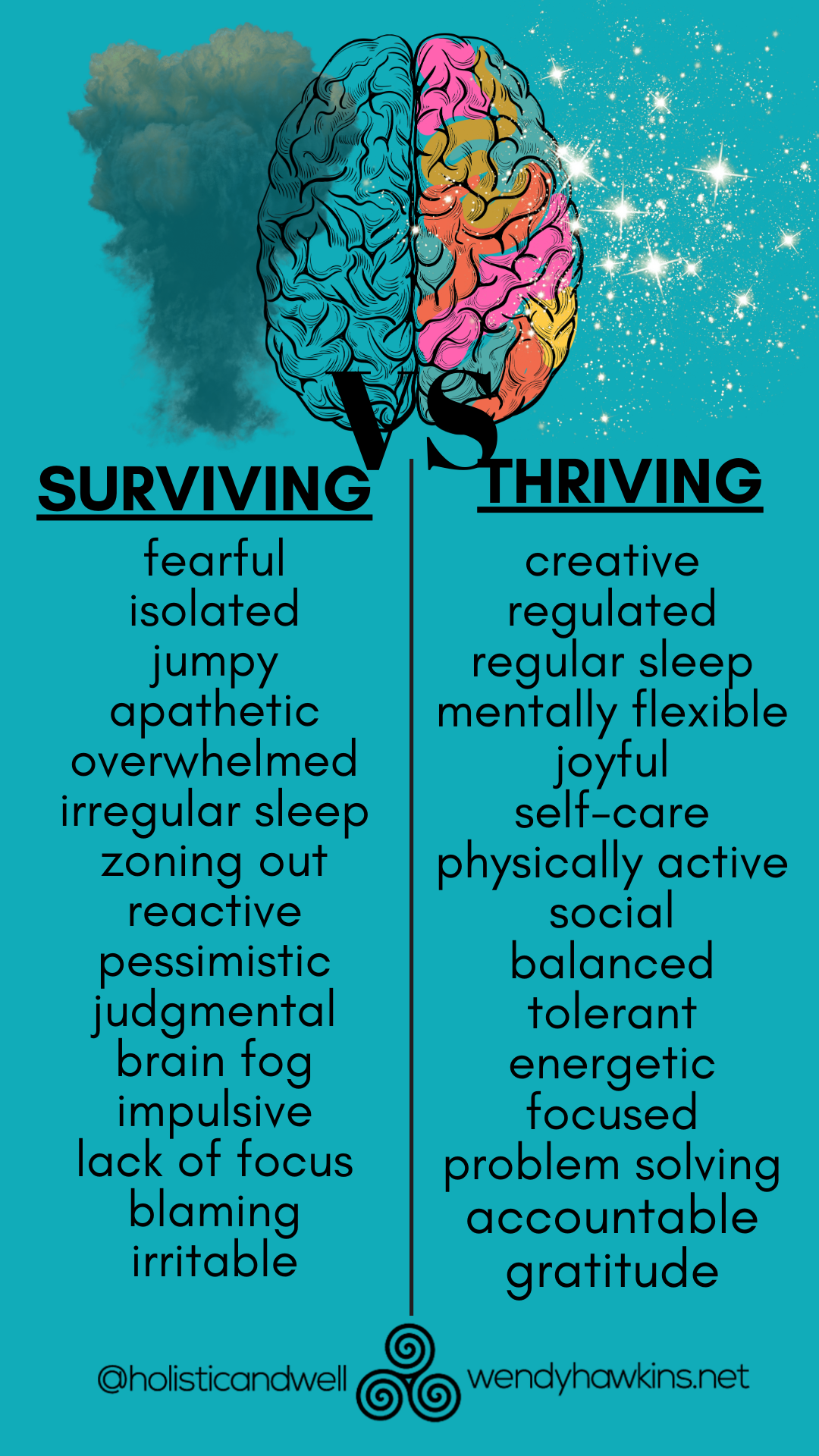
In this state, the body learns that being alert equals being safe so slowing down and resting may trigger feelings of discomfort because the nervous system interprets stillness as unfamiliar and unsafe. The absence of activity can create anxiety, restlessness, or guilt—not because rest is dangerous, but because the body has forgotten how to recognize safety without constant action.

My Real-Life Example

I still remember planning my very first vacation as an adult after becoming an empty nester—a girls' trip to beautiful, tropical Puerto Rico. Instead of looking forward to slowing down, I found myself meticulously planning every hour of every day. I wanted to make sure we experienced everything and made the most of every moment.

Looking back, I realize that even my approach to vacation reflected something much deeper: an unconscious belief that every moment needed to be productive. There was very little room to simply be. To rest.

Before the trip, one of my friends jokingly asked, "Wendy, can we have one day to just lounge by the pool and do nothing?" I remember feeling slightly annoyed by the suggestion. My immediate thought was, Why would anyone want to sit around and do nothing? We were on vacation! Surely we should be exploring, sightseeing, and making every minute count.

It wasn't until years later, after doing my own healing work, that I reflected on that conversation with new eyes. I realized I had unconsciously tied my sense of worth to accomplishment. Even in a setting designed for relaxation, I believed I had to earn the experience by staying busy. That mindset hadn't appeared overnight. It had been quietly shaped by messages I absorbed early in life—that being productive meant being responsible, valuable, and successful. Slowing down felt unfamiliar, and unfamiliar didn't feel safe.

Psychologically, this is a common pattern among people experiencing burnout or chronic stress. When our nervous system has spent years operating in survival mode, stillness can feel uncomfortable because the brain has learned to associate constant activity with safety and control. Healing has taught me that rest isn't something we earn after everything is finished. Rest is part of the process. It's how our minds, bodies, and nervous systems recover, integrate, and create space for growth.

Today, I still enjoy planning adventures—but I also intentionally leave room for quiet moments, unplanned conversations, and afternoons with nowhere to be. Ironically, those are often the moments I remember most.

The Astrology of Self-Worth and Burnout

From an energetic perspective, themes of self-worth, achievement, and identity are particularly relevant during periods involving Saturn, Pluto, and Capricorn energy.

Saturn often asks us to examine the structures we have built our lives upon. Pluto challenges identities that no longer serve our growth. Together, they can reveal where our value has become entangled with productivity, status, or external validation.

Current collective themes surrounding Saturn and Neptune in Aries are also encouraging many people to reevaluate who they are beyond their accomplishments. Questions such as "Who am I if I'm not constantly producing?" or "What happens if I stop proving myself?" are becoming increasingly common.

These transits invite us to redefine success in ways that honor both achievement and well-being.

Signs Your Self-Worth May Be Tied to Productivity

  • Feeling guilty when resting

  • Difficulty relaxing without distraction

  • Constantly thinking about your next task

  • Believing you must earn downtime

  • Feeling anxious when your schedule is open

  • Equating accomplishment with personal value

If these patterns sound familiar, they are not character flaws. They may simply indicate that your nervous system and self-concept have adapted to a life centered around performance.

Self-Reflection Exercise

Take a few moments to journal on the following questions:

  • What messages did I receive about productivity growing up?

  • When do I feel most worthy?

  • What emotions arise when I allow myself to rest?

  • What would change if I believed rest was productive in its own way?

Notice your answers without judgment. Awareness is often the first step toward transformation.

Reclaiming Rest as a Healing Practice

Healing does not require abandoning ambition or goals. Instead, it asks us to expand our definition of worth. Rest is not laziness. Rest is nervous system recovery. Rest is emotional regulation. Rest is a biological need that supports creativity, resilience, decision-making, and long-term mental health.

The goal is not to do less. The goal is to recognize that your value exists independently of what you accomplish. In a culture that often equates productivity with worthiness, choosing to rest may be one of the most radical acts of rebellion! And perhaps the deepest healing comes when we realize that we were always worthy—even when we weren't doing anything at all.

If you’re ready to explore your wellness, I would feel honored to be a part of your journey. Contact me so we can get have a 30-minute consultation to talk more about your vision to heal.

wh

How to avoid burnout while working from home

With the increasing prevalence of remote work, the boundaries between professional and personal life have become blurred for many people. While there are many benefits to work from home like flexibility and convenience, working from home can also present many unique challenges that can lead to anxiety and ultimately feeling burnout from what feels like a continuous state of working. Burnout is a state of chronic physical, mental and emotional exhaustion often accompanied by feelings of cynicism and detachment from work and many times life in general. Let’s look at some strategies to empower you to prevent and avoid burnout as you enjoy your work from home career.


Routine! Routine! Routine!

Creating and maintaining a structured daily routine is key to preventing burnout while working remotely. This means regular work hours, consistent breaks as well as an obvious and clear separation within the home between work and your personal life.


Designated workspace!

This is a crucial for establishing psychological boundaries for a healthy work-life balance. Designate a specific area in your home for working rather it’s a corner or a room that is limited by only work-related activities. This space should be free from distractions to allow you to optimize your productivity. By creating a space separate from your living space, you will mentally associate it with work which will activate a mental off/on switch when you enter that space allowing there to be a boundary that will greatly reduce the risk of burnout.


Self-care is a must!

Do more of what brings you joy! Prioritize sleep, nutrition and hydration as well as mindfulness, movement and relaxation. Just as you would do working out in the world, maintain your social connections and seek support from friends. Schedule a lunch date, grab an early morning coffee or walk with friends during your scheduled breaks to stay connected and help alleviate the possibility of burnout.


Establish clear boundaries!

It’s very easy to blur the line between professional and personal life when working from home. Make sure to communicate your availability and working hours to colleagues, friends, clients/customers and family members to minimize outside distractions while working. Set guidelines for interruptions during work hours by using headphones, placing a physical or digital “do not disturb sign up”, silencing your phone or by scheduling phone calls and return emails.


Practice effective time management!

Effective time managmenet is the key to maintaining productivity while also preventing burnout. Set realistic goals for yourself and prioritize work tasks based on their importance and urgency to be completed throughout the workday. Utilize visual aids such as calendars or white boards to post tasks and their targeted completion date. Setting reminders on the computer or your phone can help you to stay on task, which ultimately helps with productivity as well as decreasing feelings of stress or feeling overwhelmed. Fight the urge to multi-task work and home tasks as it can be really easy to get distracted when doing this.


As remote work continues to be a prevalent mode of employment, the risk of burnout also remains a significant source of concern. Make sure to implement the tips and strategies recommended to mitigate the possibility of burnout and fatigue. It is imperative to remember that maintaining a healthy work-life balance and prioritizing mental well-being are fundamental to long-term professional success and overall happiness.


Learning how to avoid burnout while putting some strategies in place takes time and patience. I’m here to support you through your journey. If you’re struggling with creating a healthy work-life balance, I can help! Let’s schedule a 30-minute complimentary consultation to talk a little bit about what’s going on in your world and what action you’d like to take for it to be even better. I look forward to hearing from you. Take care!

wh


Growing your emotional intelligence

What is emotional intelligence?

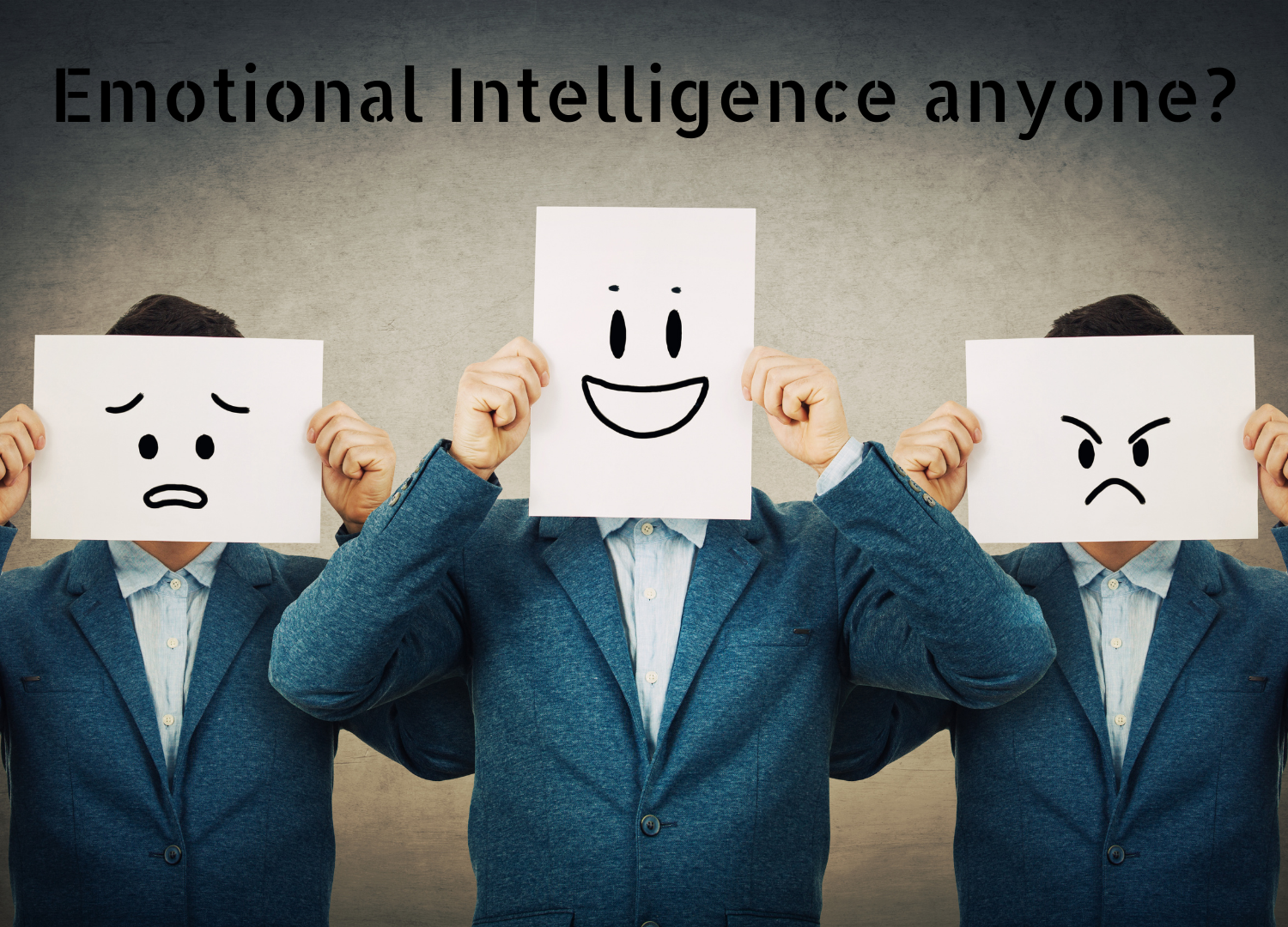
Emotional intelligence also referred to as EI is our way of receiving, perceiving, controlling and evaluating our emotions within different contexts of our life. EI is a skill that is learned and developed over time, however, there are many people that don’t have a clue about emotions and believe they are unable to successfully control them. If you’re uncertain about your level of emotional intelligence, go and take this free assessment to get an idea of your skill level.

 Most of us know how to express our emotions but managing them is another story! I think it’s safe to say having emotions isn’t the issue but instead knowing what to do with an emotion is where most people struggle. Human beings experience different emotions for different reasons and those emotions aren’t good or bad. Emotions are a survival mechanism built into our cognitive abilities that help to promote a greater chance of survival within our environment. Think about emotions like fear and anger. Those are emotions that prompt change or quick action where sadness or disgust promote reflection and understanding. All emotions promote adaptation within our current setting.


The goal of emotional intelligence

Emotional intelligence is something we use for our entire lifespan so the ultimate goal is to create a better quality of life and more connected relationships to foster a sense of belonging. How do we use EI and what’s the impact for us?

Minimizes emotional reaction
Emotions are powerful! When we are in an emotionally charged space, it is important to have the ability to take a step back to analyze the situation to reduce conflict, optimize communication with others and to consider all factors before responding.

Increases self-awareness
Emotional intelligence empowers us to have the ability to think about what our emotions mean as well as considering all factors in moments of elevated emotion. Self-awareness is what provides insight to what and why we do certain things.

Nurtures empathy for others
Thinking about how others feel in different situations is essential to a developed emotional intelligence. Many times, we have to think about if this were me, how would I feel and what would I need from others. The ability to empathize drastically reduces judgement of others.


How do we use Emotional Intelligence

Emotional intelligence is used in a multitude of moments throughout our lifetime. Here are some ways in which emotional intelligence is practiced as well as how it impacts:

  • Increasing our ability to accept criticism and responsibility for our actions

  • Using mistakes as lessons and then being able to move on or “let go” rather than staying stuck

  • Setting boundaries and saying no when necessary which teaches others how to treat you

  • Developing connection within our relationships by sharing our feelings with others

  • Actively solving problems in ways that work for everyone

  • Experiencing empathy and compassion for other people

  • Expanding communication skills particularly active listening

  • Gaining understanding as to why you do the things you do helps with self-image

  • Reducing personal bias and less judgmental of others

What’s next?

Understanding emotions is the key to better relationships, improved well-being, and stronger communication skills. The great news is there’s always space for learning! Since human beings began walking the earth, emotions have been essential for survival. When faced with stress, however, an underdeveloped emotional intelligence can wreak havoc in professional and personal situations. Emotions are amazing but when we’re out of our comfort zone, many of us struggle to effectively manage emotions ultimately losing control and becoming overwhelmed.

Learning to manage stress and feeling competent with your emotions takes time and patience. I’m here to support you through your journey. We all want to make choices that allow us to control impulsive feelings and behaviors, manage our emotions in healthy ways, create belonging, follow through on commitments, and adapt to changing circumstances. I offer a 30-minute complimentary consultation to talk a little bit about what’s going on in your world and what action you’d like to take for it to be even better. I look forward to hearing from you. Take care!

wh


Self-care is more than a day at the spa!

3.png

Although self-care continues to be a huge buzz word as well as a trending social media hashtag, it’s much more than selfies at the spa getting a mani and pedi with the girls. It’s so much more! Self-care is a commitment to self. It’s a pledge to make every single day to yourself. Self-care is part of a daily plan of accountability. Self-care is the ultimate act of true love! There’s nothing more important than to invest in self!

After doing some reflecting, I had to come to terms with the fact that even though I try, I’m not always intentional with my self-care. As much as I talk about it, I have to follow up with action. Considering I give to others, I have to be consistent about how I’m filling up my cup.

2.png

Here’s the Self-Care Agreement I’ve created between my present and future self:

  1. Self-care is not selfish.

  2. Self-care is a natural and standard part of my daily life to maintain an overall sense of health, wellness and well-being.

  3. Self-care requires me to be intentional and active with a specific set of activities as well as self-awareness that requires me to hold myself accountable. I will act, track, acknowledge, reflect and act again to maintain a cycle of self-care.

  4. Self-care can contribute to me being a healthier version of myself. Self-care can help with the reduction or elimination of chronic illness.

  5. Self-care empowers me to be the agent of my own health and wellness utilizing all tools available to me including both Eastern and Western concepts of medicine. I am my own healer.

  6. Self-care provides a direct personal benefit but also benefits my family, circle and community. I am responsible for my personal health and wellness to minimize and/or reduce the extra stress that chronic illness places within the healthcare system of society.

  7. Self-care presents an opportunity not only for me but extends to all societal systems to provide a strong foundation to promote the need for resources, programs, lifestyles and ideologies that support the practice of caring for self around the world.

Now that I’ve clearly outlined what self-care is, how do I set realistic goals and subsequent actions to keep the agreement I’ve made between my today me and my future me. I use the five pillars of health to help guide me create a plan that is sustainable for me to maintain.

MOVEMENT

4.png

I’ve had a bitter war with this area of my life for a long, long time. One of the best friends of anxiety is being in a suspended state of internal chaos—a state of immobility. I have a lot of experience with this space because toxic relationships feed the beast of fear.

Things to consider when creating a plan of exercise and movement:

  1. What are your ultimate goals?
    Are you trying to achieve a certain weight or challenge yourself to a minimum amount of activity per day. Make a plan and set yourself up for success.

  2. Understand and know yourself!
    I discovered long ago I am not a gym rat! I dislike the monotony of working on any gym machine. So instead I opt for outdoor activities when I can. I do my best to be in nature! What brings you joy? What do you enjoy doing? What have you used in the past that has worked and been successful for you?

  3. Utilize the resources you presently have.
    Don’t go into debt for a thousand-dollar machine that you’ll ultimately use as a towel rack. No need to purchase a gym membership if you don’t enjoy the gym. Do you like to use weights or body resistance? Do you enjoy solo or group activities?

  4. When are you most energetic?
    Again, set yourself up for success by planning your daily movement during the time of day when you’re literally going to feel the most energized to actually get it done. Do you have energy in the morning, mid-day or in the evening?

  5. Actually plan it out!
    Make a commitment to self and put it on your calendar or whatever device you use to plan your life, time and activities. Make it concrete and real. Hold yourself accountable.

 FOOD

I’m sure you’ve heard the saying “A moment on your lips is a lifetime on your hips.” This has come true for me! My younger self could eat whatever the heck she wanted with no immediate issues or repercussions. Not to mention it was nothing to basically starve myself for a week to shed a few unwanted pounds. Sugar has always been my nemesis. But my midlife self is paying the price for her ignorant attitude towards food.

Understand that all areas of life are interconnected so emotional eating is very real for many including myself. My today self sees food only as a mechanism of fuel for my body. Don’t get me wrong, I still get pleasure from eating certain things (usually sweets) but I have lots more intention behind what I feed myself on a daily basis rather than stuffing my mouth when my emotions are elevated.

Here are some things to consider:

  1. Pay attention to your body when you eat. Do you get bloated or sleepy after certain foods? What foods give you energy? Are you paying attention to portion size?

  2. Understand what the body needs to be healthy. There’s a science behind nutrition and what the body requires to work at an optimum level. Supplement when necessary.

  3. Life is about balance and so is eating!!

STRESS MANAGEMENT

First and foremost it is so important to understand that stress is a natural and healthy part of life. Stress is a built-in survival mechanism to keep us alive and the human species going. What’s not natural on the other hand is allowing stress to manifest into anxiety which is exactly what happens when we’re not effective at stress management. Many of us for an abundance of reasons did not get that training as a child and now here we are stuck in a loop of debilitating anxiety.

One of the greatest gifts we can give to self is the gift of managing stress before it gets out of control. There’s much more to this practice but here’s some highlights:

1.png
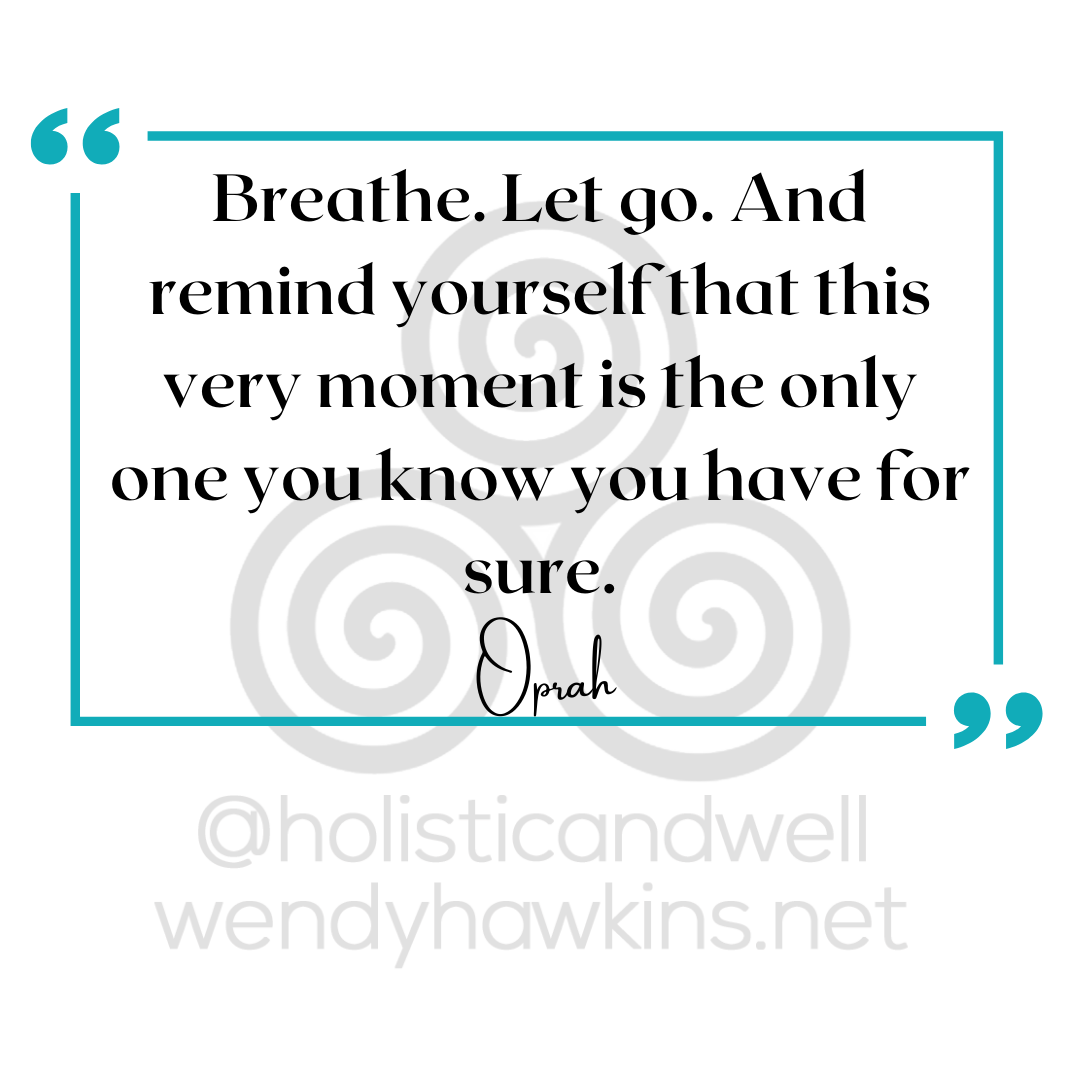
  1. Live in the moment. Learn the skill of being in the right now. Stop putting the focus on what happened or what might happen. Focus on what’s happening right this moment.

  2. Develop stress-relieving habits. Figure out what helps you to relax. What hobbies do you enjoy? What music speaks to your soul?.

  3. Learn to assertively communicate. Being able to express yourself to others in a way that is healthy is absolutely priceless. Don’t engage in conflict unless it means growth for you. Learn that it’s okay to walk away from a conversation or a person who no longer brings you joy.

  4. Let go of being perfect. We’re taught from an early age to do and be the best! Just be the best version of you.

  5. Control is an illusion. We can only control one person….my individual self. There is no other control.

SLEEP

I’m learning more and more about the power of restorative sleep. I took this for granted in my younger decades using the erroneous adage of “I’ll sleep when I’m dead” to keep me going and going and going. My today self is thinking WTF were you doing? It was nothing for me to be up “kickin it” until 3 or 4 in the morning to turn around and get up a couple of hours later to get my kids to school and go to work for eight hours. If I could tell my younger self anything it would be to sit down, be still and get your rest girlfriend each and every night!

The science of sleep in connection with our overall sense of well-being has grown immensely in the last decade. Sleep is meant to sluff off the waste that is created on a biochemical level within the body and brain throughout the day. The brain rids itself of metabolic trash during sleep. Toxins are removed to eliminate build up and ultimately the development of chronic health issues later down the road. The connection between poor blood sugar management and the risk of developing Alzheimer’s is overwhelming! Guess what happens when we don’t take the trash out?

Suggestions for better sleep:

  1. Sleep hygiene aka sleep etiquette is essential for a good night’s rest!

  2. Create a routine to get your body in the habit of a predictable wake-sleep routine. Your mental health will thank you!

  3. Include magnesium rich foods in your diet or take a supplement.

  4. Manage stress and practice mindfulness.

COMMUNITY

If we’ve learned nothing else in the era of COVID is that our community, our peeps, our family, our circle is essential to feeling connected  within the mind-body-spirit triad. Human beings are meant to be social. Living in isolation all the time is a slow death. An integral part of self-care is to have a community of like-minded people who support and love YOU!

Some things to consider in your relationships:

Respect for self and others is key. Is there mutual respect?

  1. Is there healthy communication? Do you feel safe expressing yourself? Do you feel heard and validated?

  2. Are you encouraged and supported through your high and low moments?

  3. Are you able to compromise so that both of you are getting your needs met?

  4. Feeling safe is nonnegotiable.

  5. Are you able to be autonomous and set healthy boundaries?

FINAL THOUGHTS…

Don’t get caught up in the frenzy of trends. Be intentional with your time, energy and resources to take care of yourself. I wanted to celebrate International Self-Care Day by taking time to sit with myself and commit to the process of actual self-care which is more than a spa day. I’m always available for additional conversation so take advantage of my free 30-minute consultation if you have additional questions or thoughts. Take care!

wh 

Resources:

https://isfglobal.org/international-self-care-day/

https://commonwealthherbs.com/

https://mindbodyfitness.us/2017/10/20/the-five-pillars-of-wellness/

Mentally healthy in the Workplace

mentally healthy in the workplace

mentally healthy in the workplace

Are you mentally healthy in the workplace?

It’s 7:56am, and a silver mini-van smashes into the rear-end of your car, sending you off the lane and into the highway shoulder. Within 5 loud seconds, you open your eyes to the dusty remnants of deployed airbags and honking horns surrounding you. You’re okay, but your car isn’t, and the Monday morning traffic has manifested into an impending time-consuming insurance mess, some trips to the chiropractor for whiplash, and a week-long rental car commitment. Not to mention, your boss and co-workers are awaiting your arrival to present your quarterly report. This is a very valid reason to be late. This is even a valid reason to miss work entirely that day, and perhaps the next few. Emergencies happen, and there’s an acceptance for sudden circumstances (medical or family related mostly) that are allowed to stand in the way of promptness and attendance in the 9 to 5 routine.

Now, let’s change the scenario a bit.

It’s 7:56am, and your heart begins to palpitate. Your chest heaves in and out heavily as you begin to hyperventilate, and the room feels like it’s spinning. That morning’s anxiety has built up from the fear of your upcoming office presentation manifested into panic, sending your body into complete fight-or-flight mode. The attack consumes your whole body. You open your eyes to find yourself curled up in bed after a brief blackout. You begin sobbing uncontrollably. Your neck is tense--in fact, your entire body is tense, your mascara is smeared across your face and your shirt is stained from the coffee spilling as you frantically searched to hold on to something for balance as the panic attack hit you. Your boss and co-workers are sitting in the conference room awaiting your arrival, wondering why you haven’t arrived to complete your presentation. Eyes frequently darting at the clock.  Why does it feel like you need to make up a lie about the reason for your lateness or even possibly your absence for the day? 

Mental Health and Stigma

One in five Americans suffers from some type of mental health disorder, so the likelihood of a co-worker experiencing rough times due to mental illness is not far-fetched. In fact, two out of five employees have been bullied at work. So now the odds are even greater that you will directly experience a mental health episode at work or see one of your coworkers struggling. Are you mentally healthy in the workplace? Why is there more acceptance and "forgiveness" for a car accident than for chronic mental illness? We all have to work towards eliminating the stigma! Although the stigma surrounding mental health illness has begun to slowly melt away in the workplace with insurance programs offering services through EAP (employee assistance programs) as well as new hire orientation programs educating on the subject, there is still a lot of work to do!! Reporting a panic attack to the boss creates much more anxiety than one related to a highway car accident or the baby being sick. Admitting mental health issues runs the risk of being cast in a “crazy” light leaving oneself open for judgement despite the irrelevance to job performance in most cases. Acknowledging such a taboo provides an opportunity to be treated differently (in a negative, outcast type of way) after coming out about an issue, which in itself be the domino that impacts how they feel in an office environment. This negative treatment eventually affecting work performance as well as adding to the mental health issue. It could make for a very unhealthy and unproductive cycle for all involved!

There is hope!

Thankfully, as science and education expand, acceptance follows, and mental health awareness throughout offices in America do show signs of progress. Recently, an employee openly expressed in her automatic email response that she would be taking time off to focus on her mental health. Her boss responded with gratitude, commending her for her confidence and openness on the subject that he felt reminded the rest of the employees to practice the same type of self-care. These types of reactions and support systems are extremely helpful in normalizing mental health in the workplace because for those of us who suffer, we know full well that issues stemming from mental health illness can be as debilitating is the worst case of the flu, traffic accident or any other family emergency deemed acceptable. Life is hard. Even for those who do not have the obstacle of chronic mental health issues, juggling everyday tasks, routines, demands surrounding the mind, body and health is a constant struggle. Throw in the added weight of mental instability and life does not get any easier. Work-life balance, specifically an emphasis on self-care, is imperative to maintaining a stable track mentally, physically and spiritually. Committing to daily practices like those found in your Mental Health Toolbox are just as important as setting your alarm clock or brushing your teeth. It is so necessary to stay in charge of your mental health journey and continue empowering yourself to be the best version of you that is possible. Reach your highest potential without allowing a diagnosis prevent you from anything less. Invest in yourself, empower yourself and education and you WILL evolve to greatness.  You can be mentally healthy in the workplace! I'm always available to chat. Don’t forget I have a 30-minute complimentary consultation available. I believe in you!

wh