
brain fog

Why Rest Feels Unsafe: The Psychology of Productivity and Self-Worth

Let’s pause and take a minute to reflect. When you sit down to rest, have you ever found yourself sitting down and feeling anxious, restless, or even feeling guilty?

Everything has been crossed off the “to do” list but still your mind continues racing.

Maybe you finally have a free afternoon but can't seem to enjoy it because you're already thinking about what needs to be done next.

I hear these same stentiments everyday and even have to manage these feelings within myself!

Many people struggling with burnout, chronic stress, anxiety, and nervous system exhaustion discover that rest doesn't feel restorative—it feels uncomfortable. From both psychological and astrological perspectives, this discomfort often points to deeper questions surrounding self-worth, identity, and our relationship with a culture of productivity.

When Productivity Becomes Identity

In our modern culture, busyness is often worn as a badge of honor and pride. We praise people for working harder, accomplishing more, and constantly striving toward the next goal. Ever heard the saying I’ll sleep when I die? That very idealogy is what perpetuates within all of us the feelings that we have to always be busy to be of value.

In the mental health world, we refer to this as conditional self-worth—the belief that we are valuable only when we are achieving, helping others, or meeting expectations. When self-worth becomes tied to performance, rest can feel threatening because it challenges the very foundation upon which we have built our identity. This way of thinking is particularly common among first born, caregivers, high achievers, entrepreneurs, and individuals who grew up feeling responsible for the emotional needs of others.

Why Rest Can Feel Unsafe

From a nervous system perspective, chronic stress changes the way the body functions. When we experience prolonged periods of uncertainty, trauma, caregiving responsibilities, financial pressure, or emotional overwhelm, the nervous system can become stuck in survival mode.
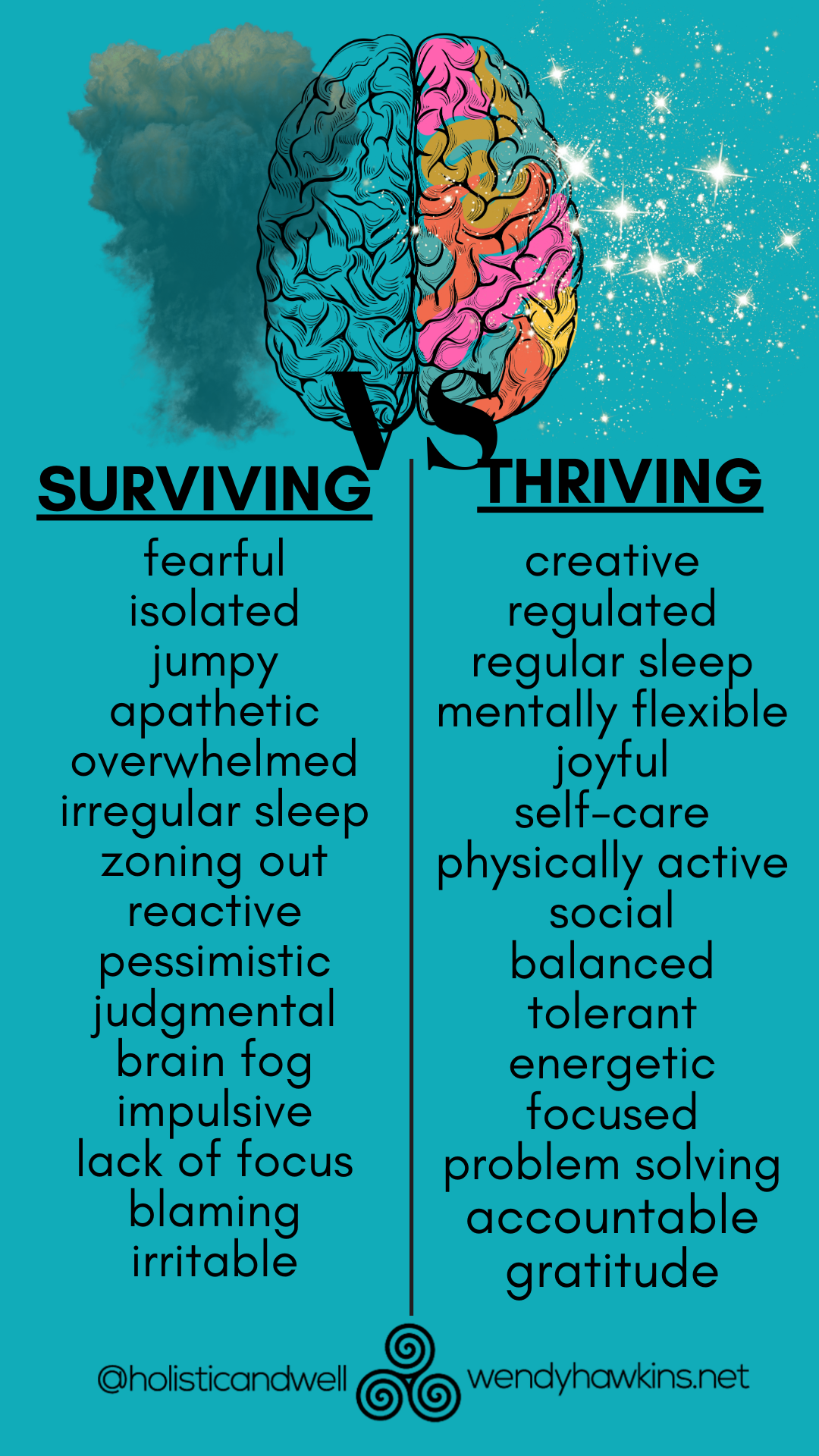
In this state, the body learns that being alert equals being safe so slowing down and resting may trigger feelings of discomfort because the nervous system interprets stillness as unfamiliar and unsafe. The absence of activity can create anxiety, restlessness, or guilt—not because rest is dangerous, but because the body has forgotten how to recognize safety without constant action.

My Real-Life Example

I still remember planning my very first vacation as an adult after becoming an empty nester—a girls' trip to beautiful, tropical Puerto Rico. Instead of looking forward to slowing down, I found myself meticulously planning every hour of every day. I wanted to make sure we experienced everything and made the most of every moment.

Looking back, I realize that even my approach to vacation reflected something much deeper: an unconscious belief that every moment needed to be productive. There was very little room to simply be. To rest.

Before the trip, one of my friends jokingly asked, "Wendy, can we have one day to just lounge by the pool and do nothing?" I remember feeling slightly annoyed by the suggestion. My immediate thought was, Why would anyone want to sit around and do nothing? We were on vacation! Surely we should be exploring, sightseeing, and making every minute count.

It wasn't until years later, after doing my own healing work, that I reflected on that conversation with new eyes. I realized I had unconsciously tied my sense of worth to accomplishment. Even in a setting designed for relaxation, I believed I had to earn the experience by staying busy. That mindset hadn't appeared overnight. It had been quietly shaped by messages I absorbed early in life—that being productive meant being responsible, valuable, and successful. Slowing down felt unfamiliar, and unfamiliar didn't feel safe.

Psychologically, this is a common pattern among people experiencing burnout or chronic stress. When our nervous system has spent years operating in survival mode, stillness can feel uncomfortable because the brain has learned to associate constant activity with safety and control. Healing has taught me that rest isn't something we earn after everything is finished. Rest is part of the process. It's how our minds, bodies, and nervous systems recover, integrate, and create space for growth.

Today, I still enjoy planning adventures—but I also intentionally leave room for quiet moments, unplanned conversations, and afternoons with nowhere to be. Ironically, those are often the moments I remember most.

The Astrology of Self-Worth and Burnout

From an energetic perspective, themes of self-worth, achievement, and identity are particularly relevant during periods involving Saturn, Pluto, and Capricorn energy.

Saturn often asks us to examine the structures we have built our lives upon. Pluto challenges identities that no longer serve our growth. Together, they can reveal where our value has become entangled with productivity, status, or external validation.

Current collective themes surrounding Saturn and Neptune in Aries are also encouraging many people to reevaluate who they are beyond their accomplishments. Questions such as "Who am I if I'm not constantly producing?" or "What happens if I stop proving myself?" are becoming increasingly common.

These transits invite us to redefine success in ways that honor both achievement and well-being.

Signs Your Self-Worth May Be Tied to Productivity

  • Feeling guilty when resting

  • Difficulty relaxing without distraction

  • Constantly thinking about your next task

  • Believing you must earn downtime

  • Feeling anxious when your schedule is open

  • Equating accomplishment with personal value

If these patterns sound familiar, they are not character flaws. They may simply indicate that your nervous system and self-concept have adapted to a life centered around performance.

Self-Reflection Exercise

Take a few moments to journal on the following questions:

  • What messages did I receive about productivity growing up?

  • When do I feel most worthy?

  • What emotions arise when I allow myself to rest?

  • What would change if I believed rest was productive in its own way?

Notice your answers without judgment. Awareness is often the first step toward transformation.

Reclaiming Rest as a Healing Practice

Healing does not require abandoning ambition or goals. Instead, it asks us to expand our definition of worth. Rest is not laziness. Rest is nervous system recovery. Rest is emotional regulation. Rest is a biological need that supports creativity, resilience, decision-making, and long-term mental health.

The goal is not to do less. The goal is to recognize that your value exists independently of what you accomplish. In a culture that often equates productivity with worthiness, choosing to rest may be one of the most radical acts of rebellion! And perhaps the deepest healing comes when we realize that we were always worthy—even when we weren't doing anything at all.

If you’re ready to explore your wellness, I would feel honored to be a part of your journey. Contact me so we can get have a 30-minute consultation to talk more about your vision to heal.

wh

How Mercury Retrograde Affects Mental Clarity and Emotional Well-Being

How Mercury Retrograde Affects Mental Clarity and Emotional Well-Being

Discover how Mercury Retrograde affects mental clarity, decision-making, and emotional balance. Learn astrology-based strategies to navigate challenges and improve mindfulness during this planetary cycle. 🌌✨ #MercuryRetrograde #Astrology #MentalHealth

Growing your emotional intelligence

What is emotional intelligence?

Emotional intelligence also referred to as EI is our way of receiving, perceiving, controlling and evaluating our emotions within different contexts of our life. EI is a skill that is learned and developed over time, however, there are many people that don’t have a clue about emotions and believe they are unable to successfully control them. If you’re uncertain about your level of emotional intelligence, go and take this free assessment to get an idea of your skill level.

 Most of us know how to express our emotions but managing them is another story! I think it’s safe to say having emotions isn’t the issue but instead knowing what to do with an emotion is where most people struggle. Human beings experience different emotions for different reasons and those emotions aren’t good or bad. Emotions are a survival mechanism built into our cognitive abilities that help to promote a greater chance of survival within our environment. Think about emotions like fear and anger. Those are emotions that prompt change or quick action where sadness or disgust promote reflection and understanding. All emotions promote adaptation within our current setting.


The goal of emotional intelligence

Emotional intelligence is something we use for our entire lifespan so the ultimate goal is to create a better quality of life and more connected relationships to foster a sense of belonging. How do we use EI and what’s the impact for us?

Minimizes emotional reaction
Emotions are powerful! When we are in an emotionally charged space, it is important to have the ability to take a step back to analyze the situation to reduce conflict, optimize communication with others and to consider all factors before responding.

Increases self-awareness
Emotional intelligence empowers us to have the ability to think about what our emotions mean as well as considering all factors in moments of elevated emotion. Self-awareness is what provides insight to what and why we do certain things.

Nurtures empathy for others
Thinking about how others feel in different situations is essential to a developed emotional intelligence. Many times, we have to think about if this were me, how would I feel and what would I need from others. The ability to empathize drastically reduces judgement of others.


How do we use Emotional Intelligence

Emotional intelligence is used in a multitude of moments throughout our lifetime. Here are some ways in which emotional intelligence is practiced as well as how it impacts:

  • Increasing our ability to accept criticism and responsibility for our actions

  • Using mistakes as lessons and then being able to move on or “let go” rather than staying stuck

  • Setting boundaries and saying no when necessary which teaches others how to treat you

  • Developing connection within our relationships by sharing our feelings with others

  • Actively solving problems in ways that work for everyone

  • Experiencing empathy and compassion for other people

  • Expanding communication skills particularly active listening

  • Gaining understanding as to why you do the things you do helps with self-image

  • Reducing personal bias and less judgmental of others

What’s next?

Understanding emotions is the key to better relationships, improved well-being, and stronger communication skills. The great news is there’s always space for learning! Since human beings began walking the earth, emotions have been essential for survival. When faced with stress, however, an underdeveloped emotional intelligence can wreak havoc in professional and personal situations. Emotions are amazing but when we’re out of our comfort zone, many of us struggle to effectively manage emotions ultimately losing control and becoming overwhelmed.

Learning to manage stress and feeling competent with your emotions takes time and patience. I’m here to support you through your journey. We all want to make choices that allow us to control impulsive feelings and behaviors, manage our emotions in healthy ways, create belonging, follow through on commitments, and adapt to changing circumstances. I offer a 30-minute complimentary consultation to talk a little bit about what’s going on in your world and what action you’d like to take for it to be even better. I look forward to hearing from you. Take care!

wh


Begin with sleep

begin with sleep

begin with sleep

Begin with Sleep

As our everyday surroundings become inundated with advertisements to medicinally tackle mental illness, it’s easy to forget that many of the answers to well-being are free, easily accessible and natural. One of them is as comfortable as a just-washed down comforter, bamboo sheets and a mountain of pillows. Looking for overall wellness? Begin with sleep!!Among the most basic of survival functions, restful sleep can double as a weapon of mass destruction against mental illness. It comes down to the same biochemical targets aimed at by the pharmaceutical industries, only sleep costs nothing and negative side effects are obsolete.

Why is sleep so important

Circadian rhythm, or as many of us know it, the ‘body clock’ is the compass within us that tells our body when to sleep, wake up and eat, among many other basic physiological processes. How does it know? Sunlight, darkness, temperature and other biological changes within the body signal to the brain that it’s time for rest, food energy, and wakefulness with very precise timing. Think of a car and the signals you see on your dashboard when it’s time to change the oil, refill for gas or stop for a cool down due to overheating. If those signals are ignored, you can end up broken down on the side of the road with a thirsty engine or even motor damage. The human body’s functions work similarly. If the circadian rhythm is disrupted when our bodies don’t follow that internal clock, our mental health and balance are thrown off, which can be a major factor that leads to mood disorders, immune system breakdowns and physical ailments. To keep the body functioning at optimal level is to begin with sleep.

What happens when we sleep

While we sleep, although or bodies are almost at a 100% standstill, our minds and physiological systems are hard at work performing various functions involving the removal of toxins, reparation of cells, consolidation of memory and processing of information from the previous day. If these functions are not wholly implemented with adequate sleep, the following day often results in cranky moods, coffee dependence, impulsive decision-making, fuzzy concentration, decreased creativity and even a weakened immune system to name a few. The accumulation of these sleepless byproducts in turn begins to build a platform for more permanent mental damage that can lead to illness like depression or anxiety. If there is a history of past trauma, obtaining good restorative sleep may be near impossible. Even worse, these mental illnesses only perpetuate the sleep disruption, sending one further down the black hole of a choppy circadian rhythm, making it harder to get back on the right track.

Being proactive is key

The protective barrier of sleep is a must within our daily routines if we aim to be healthy and balanced individuals. Of course 7-8 hours of daily sleep won’t be an instant fix for any mental health disorders however it’s a definite factor that should be included in a balanced life. With adequate sleep should come proper nutrition and exercise with the added bells and whistles of mindfulness, grounding and meditation you’ve got a proactive health routine. Going proactive with your health helps prevent prescriptions, doctor and hospital visits which are typically factors of a reactive health routine. It’s recommended to stop any ill-health symptoms before they start!

First steps...

The remedies to a healthy balance of mind, body and soul can be as simple as intentionally making the choice to sleep adequately. Of course, changes in life-long habits may not come easy, and popping a pill may sound more convenient. However, understanding and digesting the long-term benefits of a clean, nourished and rested body should be enough to reject the medicine cabinet and into a more holistic balance for a better quality of life. Making daily use of your Mental Health Toolbox and taking the initiative to seek help with implementing healthy habits are great first steps in solidifying a consistent balance and healthy mental and physical state-of-being. I'm here to support your journey. Begin with sleep!!