
well-being

Why Rest Feels Unsafe: The Psychology of Productivity and Self-Worth

Let’s pause and take a minute to reflect. When you sit down to rest, have you ever found yourself sitting down and feeling anxious, restless, or even feeling guilty?

Everything has been crossed off the “to do” list but still your mind continues racing.

Maybe you finally have a free afternoon but can't seem to enjoy it because you're already thinking about what needs to be done next.

I hear these same stentiments everyday and even have to manage these feelings within myself!

Many people struggling with burnout, chronic stress, anxiety, and nervous system exhaustion discover that rest doesn't feel restorative—it feels uncomfortable. From both psychological and astrological perspectives, this discomfort often points to deeper questions surrounding self-worth, identity, and our relationship with a culture of productivity.

When Productivity Becomes Identity

In our modern culture, busyness is often worn as a badge of honor and pride. We praise people for working harder, accomplishing more, and constantly striving toward the next goal. Ever heard the saying I’ll sleep when I die? That very idealogy is what perpetuates within all of us the feelings that we have to always be busy to be of value.

In the mental health world, we refer to this as conditional self-worth—the belief that we are valuable only when we are achieving, helping others, or meeting expectations. When self-worth becomes tied to performance, rest can feel threatening because it challenges the very foundation upon which we have built our identity. This way of thinking is particularly common among first born, caregivers, high achievers, entrepreneurs, and individuals who grew up feeling responsible for the emotional needs of others.

Why Rest Can Feel Unsafe

From a nervous system perspective, chronic stress changes the way the body functions. When we experience prolonged periods of uncertainty, trauma, caregiving responsibilities, financial pressure, or emotional overwhelm, the nervous system can become stuck in survival mode.
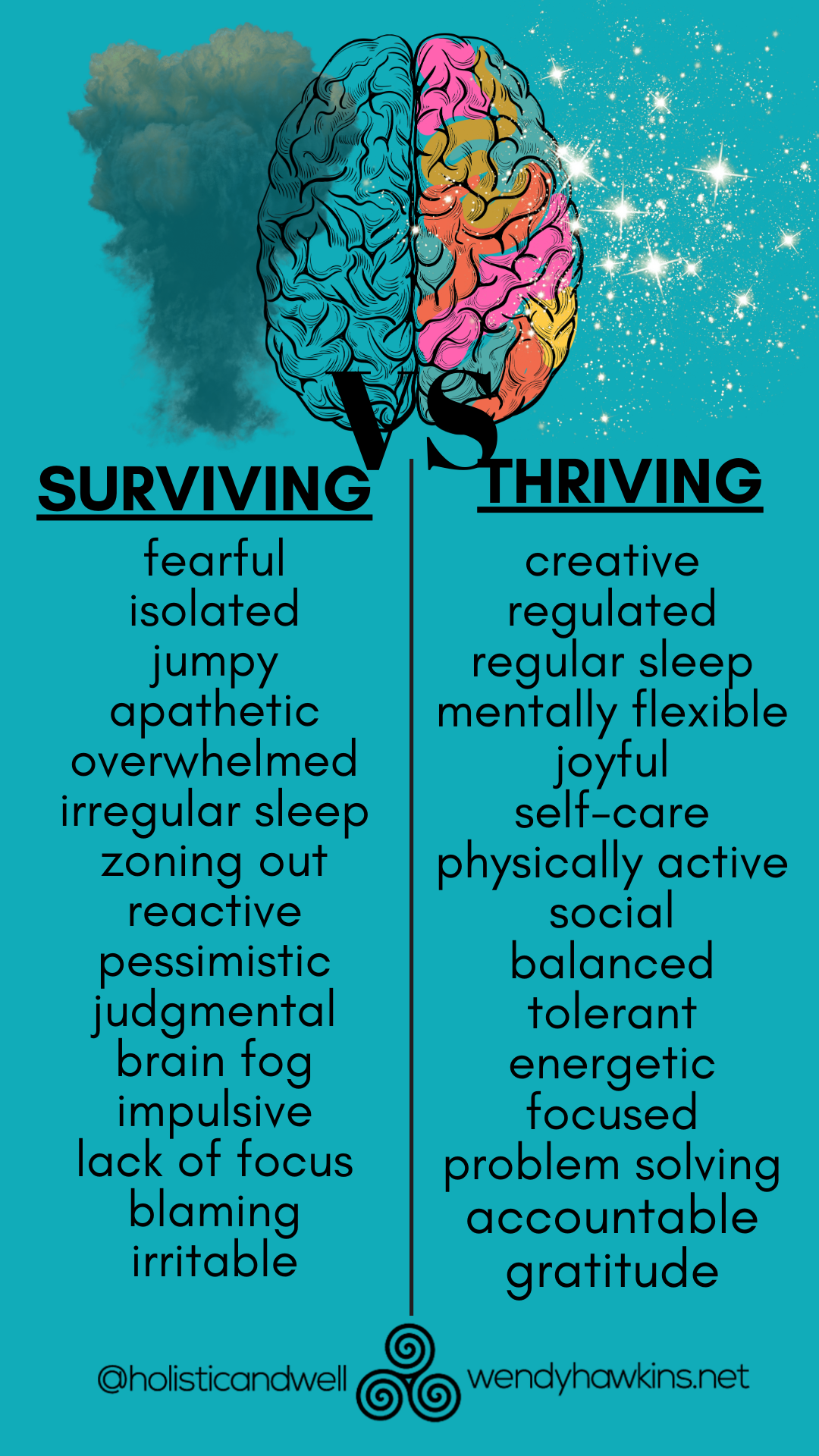
In this state, the body learns that being alert equals being safe so slowing down and resting may trigger feelings of discomfort because the nervous system interprets stillness as unfamiliar and unsafe. The absence of activity can create anxiety, restlessness, or guilt—not because rest is dangerous, but because the body has forgotten how to recognize safety without constant action.

My Real-Life Example

I still remember planning my very first vacation as an adult after becoming an empty nester—a girls' trip to beautiful, tropical Puerto Rico. Instead of looking forward to slowing down, I found myself meticulously planning every hour of every day. I wanted to make sure we experienced everything and made the most of every moment.

Looking back, I realize that even my approach to vacation reflected something much deeper: an unconscious belief that every moment needed to be productive. There was very little room to simply be. To rest.

Before the trip, one of my friends jokingly asked, "Wendy, can we have one day to just lounge by the pool and do nothing?" I remember feeling slightly annoyed by the suggestion. My immediate thought was, Why would anyone want to sit around and do nothing? We were on vacation! Surely we should be exploring, sightseeing, and making every minute count.

It wasn't until years later, after doing my own healing work, that I reflected on that conversation with new eyes. I realized I had unconsciously tied my sense of worth to accomplishment. Even in a setting designed for relaxation, I believed I had to earn the experience by staying busy. That mindset hadn't appeared overnight. It had been quietly shaped by messages I absorbed early in life—that being productive meant being responsible, valuable, and successful. Slowing down felt unfamiliar, and unfamiliar didn't feel safe.

Psychologically, this is a common pattern among people experiencing burnout or chronic stress. When our nervous system has spent years operating in survival mode, stillness can feel uncomfortable because the brain has learned to associate constant activity with safety and control. Healing has taught me that rest isn't something we earn after everything is finished. Rest is part of the process. It's how our minds, bodies, and nervous systems recover, integrate, and create space for growth.

Today, I still enjoy planning adventures—but I also intentionally leave room for quiet moments, unplanned conversations, and afternoons with nowhere to be. Ironically, those are often the moments I remember most.

The Astrology of Self-Worth and Burnout

From an energetic perspective, themes of self-worth, achievement, and identity are particularly relevant during periods involving Saturn, Pluto, and Capricorn energy.

Saturn often asks us to examine the structures we have built our lives upon. Pluto challenges identities that no longer serve our growth. Together, they can reveal where our value has become entangled with productivity, status, or external validation.

Current collective themes surrounding Saturn and Neptune in Aries are also encouraging many people to reevaluate who they are beyond their accomplishments. Questions such as "Who am I if I'm not constantly producing?" or "What happens if I stop proving myself?" are becoming increasingly common.

These transits invite us to redefine success in ways that honor both achievement and well-being.

Signs Your Self-Worth May Be Tied to Productivity

  • Feeling guilty when resting

  • Difficulty relaxing without distraction

  • Constantly thinking about your next task

  • Believing you must earn downtime

  • Feeling anxious when your schedule is open

  • Equating accomplishment with personal value

If these patterns sound familiar, they are not character flaws. They may simply indicate that your nervous system and self-concept have adapted to a life centered around performance.

Self-Reflection Exercise

Take a few moments to journal on the following questions:

  • What messages did I receive about productivity growing up?

  • When do I feel most worthy?

  • What emotions arise when I allow myself to rest?

  • What would change if I believed rest was productive in its own way?

Notice your answers without judgment. Awareness is often the first step toward transformation.

Reclaiming Rest as a Healing Practice

Healing does not require abandoning ambition or goals. Instead, it asks us to expand our definition of worth. Rest is not laziness. Rest is nervous system recovery. Rest is emotional regulation. Rest is a biological need that supports creativity, resilience, decision-making, and long-term mental health.

The goal is not to do less. The goal is to recognize that your value exists independently of what you accomplish. In a culture that often equates productivity with worthiness, choosing to rest may be one of the most radical acts of rebellion! And perhaps the deepest healing comes when we realize that we were always worthy—even when we weren't doing anything at all.

If you’re ready to explore your wellness, I would feel honored to be a part of your journey. Contact me so we can get have a 30-minute consultation to talk more about your vision to heal.

wh

How Mercury Retrograde Affects Mental Clarity and Emotional Well-Being

How Mercury Retrograde Affects Mental Clarity and Emotional Well-Being

Discover how Mercury Retrograde affects mental clarity, decision-making, and emotional balance. Learn astrology-based strategies to navigate challenges and improve mindfulness during this planetary cycle. 🌌✨ #MercuryRetrograde #Astrology #MentalHealth

Self-care is more than a day at the spa!

3.png

Although self-care continues to be a huge buzz word as well as a trending social media hashtag, it’s much more than selfies at the spa getting a mani and pedi with the girls. It’s so much more! Self-care is a commitment to self. It’s a pledge to make every single day to yourself. Self-care is part of a daily plan of accountability. Self-care is the ultimate act of true love! There’s nothing more important than to invest in self!

After doing some reflecting, I had to come to terms with the fact that even though I try, I’m not always intentional with my self-care. As much as I talk about it, I have to follow up with action. Considering I give to others, I have to be consistent about how I’m filling up my cup.

2.png

Here’s the Self-Care Agreement I’ve created between my present and future self:

  1. Self-care is not selfish.

  2. Self-care is a natural and standard part of my daily life to maintain an overall sense of health, wellness and well-being.

  3. Self-care requires me to be intentional and active with a specific set of activities as well as self-awareness that requires me to hold myself accountable. I will act, track, acknowledge, reflect and act again to maintain a cycle of self-care.

  4. Self-care can contribute to me being a healthier version of myself. Self-care can help with the reduction or elimination of chronic illness.

  5. Self-care empowers me to be the agent of my own health and wellness utilizing all tools available to me including both Eastern and Western concepts of medicine. I am my own healer.

  6. Self-care provides a direct personal benefit but also benefits my family, circle and community. I am responsible for my personal health and wellness to minimize and/or reduce the extra stress that chronic illness places within the healthcare system of society.

  7. Self-care presents an opportunity not only for me but extends to all societal systems to provide a strong foundation to promote the need for resources, programs, lifestyles and ideologies that support the practice of caring for self around the world.

Now that I’ve clearly outlined what self-care is, how do I set realistic goals and subsequent actions to keep the agreement I’ve made between my today me and my future me. I use the five pillars of health to help guide me create a plan that is sustainable for me to maintain.

MOVEMENT

4.png

I’ve had a bitter war with this area of my life for a long, long time. One of the best friends of anxiety is being in a suspended state of internal chaos—a state of immobility. I have a lot of experience with this space because toxic relationships feed the beast of fear.

Things to consider when creating a plan of exercise and movement:

  1. What are your ultimate goals?
    Are you trying to achieve a certain weight or challenge yourself to a minimum amount of activity per day. Make a plan and set yourself up for success.

  2. Understand and know yourself!
    I discovered long ago I am not a gym rat! I dislike the monotony of working on any gym machine. So instead I opt for outdoor activities when I can. I do my best to be in nature! What brings you joy? What do you enjoy doing? What have you used in the past that has worked and been successful for you?

  3. Utilize the resources you presently have.
    Don’t go into debt for a thousand-dollar machine that you’ll ultimately use as a towel rack. No need to purchase a gym membership if you don’t enjoy the gym. Do you like to use weights or body resistance? Do you enjoy solo or group activities?

  4. When are you most energetic?
    Again, set yourself up for success by planning your daily movement during the time of day when you’re literally going to feel the most energized to actually get it done. Do you have energy in the morning, mid-day or in the evening?

  5. Actually plan it out!
    Make a commitment to self and put it on your calendar or whatever device you use to plan your life, time and activities. Make it concrete and real. Hold yourself accountable.

 FOOD

I’m sure you’ve heard the saying “A moment on your lips is a lifetime on your hips.” This has come true for me! My younger self could eat whatever the heck she wanted with no immediate issues or repercussions. Not to mention it was nothing to basically starve myself for a week to shed a few unwanted pounds. Sugar has always been my nemesis. But my midlife self is paying the price for her ignorant attitude towards food.

Understand that all areas of life are interconnected so emotional eating is very real for many including myself. My today self sees food only as a mechanism of fuel for my body. Don’t get me wrong, I still get pleasure from eating certain things (usually sweets) but I have lots more intention behind what I feed myself on a daily basis rather than stuffing my mouth when my emotions are elevated.

Here are some things to consider:

  1. Pay attention to your body when you eat. Do you get bloated or sleepy after certain foods? What foods give you energy? Are you paying attention to portion size?

  2. Understand what the body needs to be healthy. There’s a science behind nutrition and what the body requires to work at an optimum level. Supplement when necessary.

  3. Life is about balance and so is eating!!

STRESS MANAGEMENT

First and foremost it is so important to understand that stress is a natural and healthy part of life. Stress is a built-in survival mechanism to keep us alive and the human species going. What’s not natural on the other hand is allowing stress to manifest into anxiety which is exactly what happens when we’re not effective at stress management. Many of us for an abundance of reasons did not get that training as a child and now here we are stuck in a loop of debilitating anxiety.

One of the greatest gifts we can give to self is the gift of managing stress before it gets out of control. There’s much more to this practice but here’s some highlights:

1.png
  1. Live in the moment. Learn the skill of being in the right now. Stop putting the focus on what happened or what might happen. Focus on what’s happening right this moment.

  2. Develop stress-relieving habits. Figure out what helps you to relax. What hobbies do you enjoy? What music speaks to your soul?.

  3. Learn to assertively communicate. Being able to express yourself to others in a way that is healthy is absolutely priceless. Don’t engage in conflict unless it means growth for you. Learn that it’s okay to walk away from a conversation or a person who no longer brings you joy.

  4. Let go of being perfect. We’re taught from an early age to do and be the best! Just be the best version of you.

  5. Control is an illusion. We can only control one person….my individual self. There is no other control.

SLEEP

I’m learning more and more about the power of restorative sleep. I took this for granted in my younger decades using the erroneous adage of “I’ll sleep when I’m dead” to keep me going and going and going. My today self is thinking WTF were you doing? It was nothing for me to be up “kickin it” until 3 or 4 in the morning to turn around and get up a couple of hours later to get my kids to school and go to work for eight hours. If I could tell my younger self anything it would be to sit down, be still and get your rest girlfriend each and every night!

The science of sleep in connection with our overall sense of well-being has grown immensely in the last decade. Sleep is meant to sluff off the waste that is created on a biochemical level within the body and brain throughout the day. The brain rids itself of metabolic trash during sleep. Toxins are removed to eliminate build up and ultimately the development of chronic health issues later down the road. The connection between poor blood sugar management and the risk of developing Alzheimer’s is overwhelming! Guess what happens when we don’t take the trash out?

Suggestions for better sleep:

  1. Sleep hygiene aka sleep etiquette is essential for a good night’s rest!

  2. Create a routine to get your body in the habit of a predictable wake-sleep routine. Your mental health will thank you!

  3. Include magnesium rich foods in your diet or take a supplement.

  4. Manage stress and practice mindfulness.

COMMUNITY

If we’ve learned nothing else in the era of COVID is that our community, our peeps, our family, our circle is essential to feeling connected  within the mind-body-spirit triad. Human beings are meant to be social. Living in isolation all the time is a slow death. An integral part of self-care is to have a community of like-minded people who support and love YOU!

Some things to consider in your relationships:

Respect for self and others is key. Is there mutual respect?

  1. Is there healthy communication? Do you feel safe expressing yourself? Do you feel heard and validated?

  2. Are you encouraged and supported through your high and low moments?

  3. Are you able to compromise so that both of you are getting your needs met?

  4. Feeling safe is nonnegotiable.

  5. Are you able to be autonomous and set healthy boundaries?

FINAL THOUGHTS…

Don’t get caught up in the frenzy of trends. Be intentional with your time, energy and resources to take care of yourself. I wanted to celebrate International Self-Care Day by taking time to sit with myself and commit to the process of actual self-care which is more than a spa day. I’m always available for additional conversation so take advantage of my free 30-minute consultation if you have additional questions or thoughts. Take care!

wh 

Resources:

https://isfglobal.org/international-self-care-day/

https://commonwealthherbs.com/

https://mindbodyfitness.us/2017/10/20/the-five-pillars-of-wellness/

The Mental Choice to be Happy

The mental choice to be happy

The mental choice to be happy

The Mental Choice to be Happy

The mental choice to be happy is tough at times but can be done. Most of us make the mental choice to get out of bed every morning and brush our teeth groggily; we choose milk and sugar with our coffee and choose a radio station on the way to work almost every day, without even thinking about it. So why is it so hard then, to choose to be happy, every day, all (if not most of) the time?

Happiness with a scientific flair

Variations in genetics and upbringing will affect the level of happiness within a person however, it’s important to know there’s scientific evidence that at least 40% of those happy levels are self-controlled. Yes! YOU are in charge of a big piece of that happy pie! And when you refine that mental choice to be happy with supplemental self-care practices such as exercise, proper nutrition and meditation, happiness becomes a natural state of being, rather than a far-fetched destination millions of mental miles away. A lot of what may cloud the awareness of choice are the layers of mental noise and excessive thought, distractions of a 9 to 5, and just the daily hustle and bustle of life’s to-do lists that we can never seem to catch up with. It’s easy for our souls to get swept away by the turbulent thoughts and schedules, but there is a way to take charge and evolve into a new mental pattern where making the choice to be happy is habitual to the mind, body and soul.

Talking yourself out of happiness

If you feel you are on a consistent path of a melancholy mindset or avenue of anxiety, you’ll find hope in learning that shifting away from that dark place begins with the openness to choose differently. Experimental studies show that acknowledging you have a choice goes a long way in the brain’s road-map to happiness. A simple self-talk, such as verbally or mentally telling yourself “I choose to be happy today” is the first step in making a positive difference in your mood and mental well-being! Try it now. And tomorrow. And every morning as part of your daily routine. Picking out a specific cue, like your alarm clock going off, or reaching for the toothbrush before looking at your mirror to smile and recite the magic words is extremely helpful in developing the easy habit.  Remember that habits become second nature behavior after only a few repetitions. Ingraining this self-talk habit into your routine is the first easy and manageable step in evolving your mental health.

Happiness habits

Many of you walk (or dance, crawl, run, fly) through life on the shirttails of common goals like saving money, avoiding junk food, reading 1 book per month or hitting sales quota at work.  Happiness should be at the top of your list. It’s no wonder why experts recommend the goal because if happiness is achieved, the rest of your goals are far more pleasant and attainable. Happiness chips away at the weights of life that once slowed down your personal progress. The question then becomes: how do you attain happiness once you’ve made the choice to make it your daily mindset? Once you've made the mental choice to be happy, there are several tweaks you can apply in your daily routine that will help reinforce the notion. Starting off with simple things like activating the muscles around your mouth that cause you to smile sends a signal to your brain that generates happiness. Try it this very second. That forced smile just stimulated the cingulate cortex, the section of your brain that controls the links between happiness and smiling. It’s like reverse activation, rather than an independent thought or circumstance igniting the happiness that creates the smile, by smiling first you are lighting a happy light in your brain on command. You simply have to make the choice to do it! Perhaps after a fresh tooth brushing in the morning, just after you’ve repeated your new happiness mantra. Give yourself a sparkle of your own self and start the day off right. Smile!!

Mental Health Toolbox

Now that you know how to apply two of the simplest, easiest actions that can get you closer to experiencing happiness as a second nature, you can begin integrating new habits as you evolve your mental well-being. Take your time, ease into it and be kind to yourself. Here is a helpful list to add to your life goals that will help you effectively accomplish the choice of being happy. If you are challenged by a mental illness like anxiety, depression or trauma, you can take the brave step of creating a mental health toolbox. It’s a personal arsenal of tools that not only help eradicate the negative mental patterns you live with, but also a great way to empower, educate and evolve into the best possible version of yourself. (Please remember that I am available to assist with added guidance.) Take care and make the mental choice to be happy!!

wh