
harmony

Why Rest Feels Unsafe: The Psychology of Productivity and Self-Worth

Let’s pause and take a minute to reflect. When you sit down to rest, have you ever found yourself sitting down and feeling anxious, restless, or even feeling guilty?

Everything has been crossed off the “to do” list but still your mind continues racing.

Maybe you finally have a free afternoon but can't seem to enjoy it because you're already thinking about what needs to be done next.

I hear these same stentiments everyday and even have to manage these feelings within myself!

Many people struggling with burnout, chronic stress, anxiety, and nervous system exhaustion discover that rest doesn't feel restorative—it feels uncomfortable. From both psychological and astrological perspectives, this discomfort often points to deeper questions surrounding self-worth, identity, and our relationship with a culture of productivity.

When Productivity Becomes Identity

In our modern culture, busyness is often worn as a badge of honor and pride. We praise people for working harder, accomplishing more, and constantly striving toward the next goal. Ever heard the saying I’ll sleep when I die? That very idealogy is what perpetuates within all of us the feelings that we have to always be busy to be of value.

In the mental health world, we refer to this as conditional self-worth—the belief that we are valuable only when we are achieving, helping others, or meeting expectations. When self-worth becomes tied to performance, rest can feel threatening because it challenges the very foundation upon which we have built our identity. This way of thinking is particularly common among first born, caregivers, high achievers, entrepreneurs, and individuals who grew up feeling responsible for the emotional needs of others.

Why Rest Can Feel Unsafe

From a nervous system perspective, chronic stress changes the way the body functions. When we experience prolonged periods of uncertainty, trauma, caregiving responsibilities, financial pressure, or emotional overwhelm, the nervous system can become stuck in survival mode.
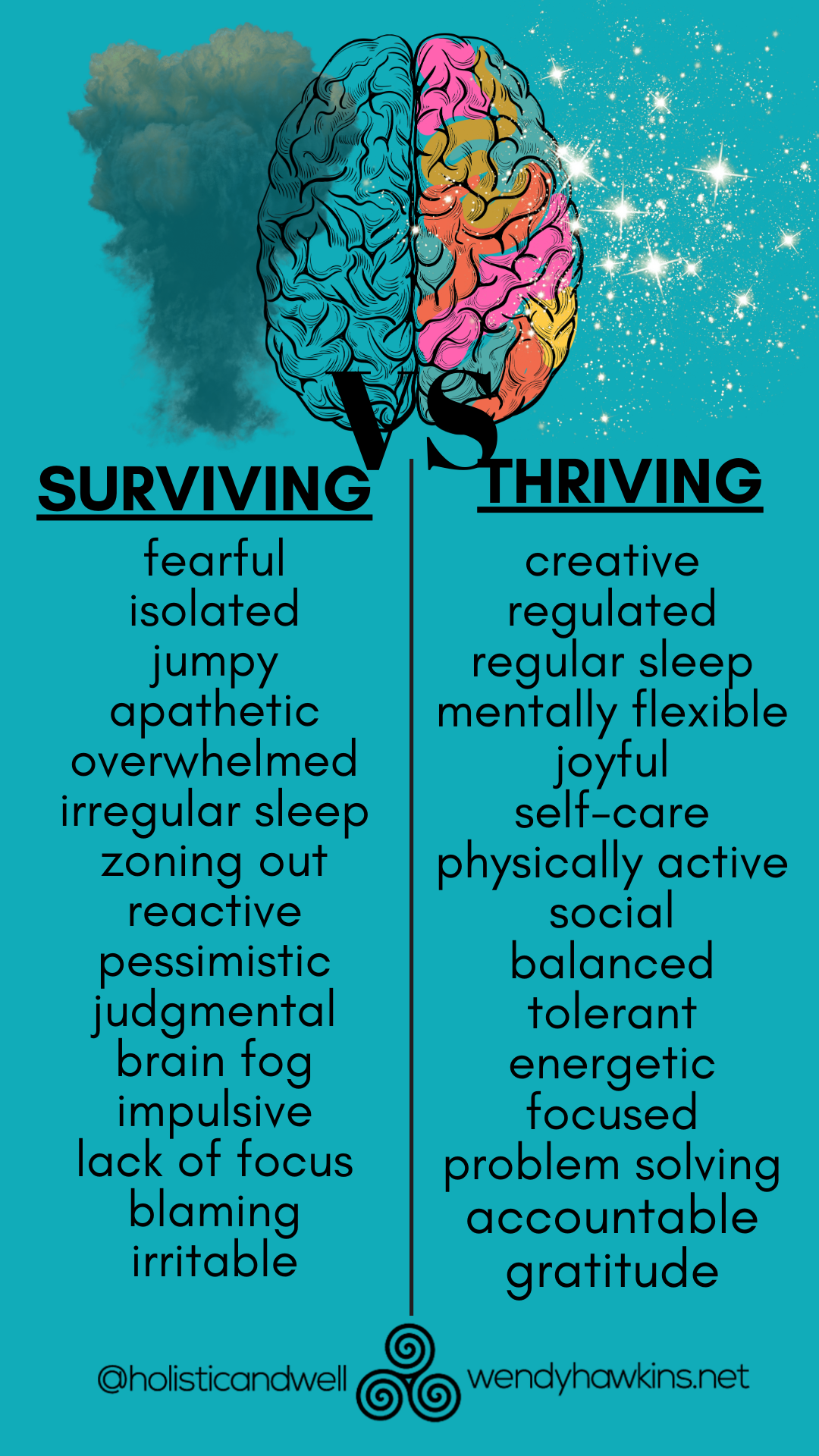
In this state, the body learns that being alert equals being safe so slowing down and resting may trigger feelings of discomfort because the nervous system interprets stillness as unfamiliar and unsafe. The absence of activity can create anxiety, restlessness, or guilt—not because rest is dangerous, but because the body has forgotten how to recognize safety without constant action.

My Real-Life Example

I still remember planning my very first vacation as an adult after becoming an empty nester—a girls' trip to beautiful, tropical Puerto Rico. Instead of looking forward to slowing down, I found myself meticulously planning every hour of every day. I wanted to make sure we experienced everything and made the most of every moment.

Looking back, I realize that even my approach to vacation reflected something much deeper: an unconscious belief that every moment needed to be productive. There was very little room to simply be. To rest.

Before the trip, one of my friends jokingly asked, "Wendy, can we have one day to just lounge by the pool and do nothing?" I remember feeling slightly annoyed by the suggestion. My immediate thought was, Why would anyone want to sit around and do nothing? We were on vacation! Surely we should be exploring, sightseeing, and making every minute count.

It wasn't until years later, after doing my own healing work, that I reflected on that conversation with new eyes. I realized I had unconsciously tied my sense of worth to accomplishment. Even in a setting designed for relaxation, I believed I had to earn the experience by staying busy. That mindset hadn't appeared overnight. It had been quietly shaped by messages I absorbed early in life—that being productive meant being responsible, valuable, and successful. Slowing down felt unfamiliar, and unfamiliar didn't feel safe.

Psychologically, this is a common pattern among people experiencing burnout or chronic stress. When our nervous system has spent years operating in survival mode, stillness can feel uncomfortable because the brain has learned to associate constant activity with safety and control. Healing has taught me that rest isn't something we earn after everything is finished. Rest is part of the process. It's how our minds, bodies, and nervous systems recover, integrate, and create space for growth.

Today, I still enjoy planning adventures—but I also intentionally leave room for quiet moments, unplanned conversations, and afternoons with nowhere to be. Ironically, those are often the moments I remember most.

The Astrology of Self-Worth and Burnout

From an energetic perspective, themes of self-worth, achievement, and identity are particularly relevant during periods involving Saturn, Pluto, and Capricorn energy.

Saturn often asks us to examine the structures we have built our lives upon. Pluto challenges identities that no longer serve our growth. Together, they can reveal where our value has become entangled with productivity, status, or external validation.

Current collective themes surrounding Saturn and Neptune in Aries are also encouraging many people to reevaluate who they are beyond their accomplishments. Questions such as "Who am I if I'm not constantly producing?" or "What happens if I stop proving myself?" are becoming increasingly common.

These transits invite us to redefine success in ways that honor both achievement and well-being.

Signs Your Self-Worth May Be Tied to Productivity

  • Feeling guilty when resting

  • Difficulty relaxing without distraction

  • Constantly thinking about your next task

  • Believing you must earn downtime

  • Feeling anxious when your schedule is open

  • Equating accomplishment with personal value

If these patterns sound familiar, they are not character flaws. They may simply indicate that your nervous system and self-concept have adapted to a life centered around performance.

Self-Reflection Exercise

Take a few moments to journal on the following questions:

  • What messages did I receive about productivity growing up?

  • When do I feel most worthy?

  • What emotions arise when I allow myself to rest?

  • What would change if I believed rest was productive in its own way?

Notice your answers without judgment. Awareness is often the first step toward transformation.

Reclaiming Rest as a Healing Practice

Healing does not require abandoning ambition or goals. Instead, it asks us to expand our definition of worth. Rest is not laziness. Rest is nervous system recovery. Rest is emotional regulation. Rest is a biological need that supports creativity, resilience, decision-making, and long-term mental health.

The goal is not to do less. The goal is to recognize that your value exists independently of what you accomplish. In a culture that often equates productivity with worthiness, choosing to rest may be one of the most radical acts of rebellion! And perhaps the deepest healing comes when we realize that we were always worthy—even when we weren't doing anything at all.

If you’re ready to explore your wellness, I would feel honored to be a part of your journey. Contact me so we can get have a 30-minute consultation to talk more about your vision to heal.

wh

Life Purpose Inventory: Questions to Get You Thinking

Why am I here and what am I supposed to be doing?

Why am I here and what am I supposed to be doing?

Why am I here and what am I supposed to be doing?

These questions—and their related variations—are eternal. They are also essential. Life is tricky and it can get heavy. If you’re not careful, it can drag you down and keep you down. Having purpose is what empowers you. It gets you off the canvas and back in the fight.

Why Do You Need to Know Your Life Purpose?

Some people may declare that they have enough purpose in the everyday life they were given. Thus, it’s helpful to not see the phrase “your life purpose” as part of a pressurized competition. Making the effort to discover your life purpose is a powerful step towards creating a new starting point for yourself. If you are at point A and your purpose is waiting for you at point B, that trip has to start somewhere at some time.

Thinking about your life purpose leads you to an intentional point of departure. From there, your mission begins. You rise each morning with purpose. You close your eyes each night knowing you’ve done the work.

6 Questions to Get You Thinking about Your Life Purpose

1. How Important is Income to Me?

It goes without saying that we all need to make money, pay bills, and create some kind of financial safety net. But different paths lead you towards different economic likelihoods. Hence, you need to seriously assess your materialistic drive. This is not a judgment. Rather, it’s an observation that will profoundly shape your path.

2. What Drives and Energizes Me?

As mentioned above, purpose is about rising each morning with a sense of mission. Do you bolt out of bed, raring to go? Or do you drag yourself into work each day? Your mind and body answer this question for you, do your best to pay attention. Tune into yourself and get a better sense of what lights you up.

3. What is Worth Making Sacrifices For?

Except in very rare instances, there are no free lunches. Everything comes with a cost. There are many trade-offs in life. This is why you must know what purpose is worth the sacrifices you may be required to make.

4. Who Are My Role Models?

Innovation and uniqueness are irreplaceable. But this doesn’t mean we have to re-invent the proverbial wheel. Seek out those who have blazed similar paths and learn from them. Emulate them. Benefit from the journey they’ve already taken. Success leaves clues. You are wise to follow them.

5. Who Do I Want to Help?

Couple this question with “How can I help them?” There is no success that does not involve gratitude and giving back. And nothing reflects “purpose” like actively reaching out to make a difference in someone’s life. Consider this question to be foundational in your search for purpose.

6. How Much Am I Willing to Evolve, Grow, and Learn?

Finding your life purpose initially involves a willingness to grow. But there’s another factor that doesn’t get enough attention. Determining your purpose is not necessarily a linear path. The entire journey is a process. How willing are you to question your current situation, challenge your thoughts and make real changes?

Bonus Question: What if You Can’t “Discover” Your Life Purpose?

Fortunately, there’s no rule that says you can’t ask for some help in finding answers.

Your life, in many ways, is a product of those you spend time with. The people you trust and bond with help shape you and your path. Working with a counselor is a fine example of this process.

A few therapy sessions might provide fertile ground for new ideas and perspectives. Brainstorming and exploring in a safe encouraging environment is a powerful way to learn more about yourself and your potential. Contact me soon for a consultation. Together we can seek out your life purpose.

wh

DIY Your Mental Health Toolbox into Life!

“Take good care of yourself.”

For many of us sometimes sprinting through the rat race of life, the statement rings exceptionally loud as it floats through conversations with colleagues, family members and healthcare practitioners. What does self-care mean for you? From a holistic practitioner standpoint, it means to identify the needs of your mind, body and soul and to take the steps necessary to meet them. Let's look at one creative way to DIY your Mental Health Toolbox into life!In a world where we can witness or access anything or anyone at any time thanks to the internet and social media, practicing self-care in the 24/7 world while buried in regular life stuff like work and family can pose a challenge. But it is possible and with a little bit of prioritized time investment, it can even be creatively fun!In recent months, I’ve begun to build on the importance of this self-care way of life to encourage my clients to be the best versions of themselves as possible. A great supplement to the self-care routine that doubles as a creative catharsis project is your personal version of the Mental Health Toolbox. DIY your Mental Health Toolbox into life!

When I was doing community based services, I worked with young children as well as adolescents. For young people who are struggling with keeping it together at times, I would create a "coping skills bag" which is basically a portable Mental Health Toolbox. We would talk out what they liked to do and then I would fill their bag with those items. It could range from coloring books and crayons to legos or puzzles. The possibilities were endless! The point was they had immediate solutions at their fingertips of how to effectively manage their emotions and overall well-being.

As with the coping skills bag, the concept of the Mental Health Toolbox encourages you to have the proper tools necessary to empower yourself and take charge of your mental health journey at your fingertips. This toolbox will vary from person to person, and as your holistic therapist, I assist with helping you choose the tools that work best for your mental wellness.

Some of these tools can be the practice of better habits like adequate rest and nutrition, but some of them can be actual items that can be collected in your personal Mental Health Toolbox and need to be stored. The object is to have it within quick access when you are in need of self-care or relief from any of life’s day-to-day strains. These items can range from some of your favorite photos, a variety of journals, an uplifting book, scent oils or incense, bath bombs, healthy snacks, business cards for on-call massage therapists, your favorite teas, stress balls and anything under that sun that can act as a little friend to help get you through the day.

DIY Your Mental Health Toolbox into Life!

Because these items can go a long way in providing relief and relaxation, they most certainly deserve a good home!

DIY Your Mental Health Toolbox into Life!

DIY Your Mental Health Toolbox into Life!

DIY Your Mental Health Toolbox into Life!

DIY Your Mental Health Toolbox into Life!

DIY Your Mental Health Toolbox into Life!

DIY Your Mental Health Toolbox into Life!

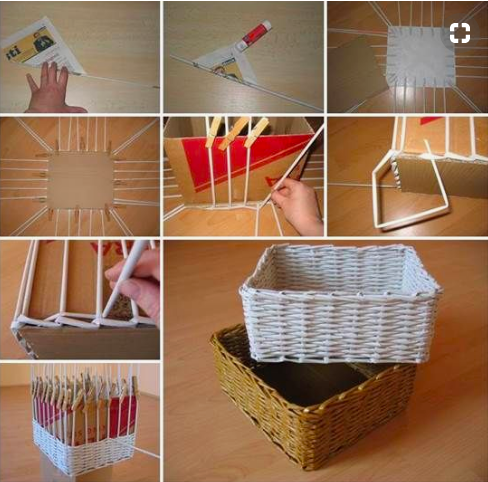
I’ve found some of my favorite DIY self-care box ideas on Pinterest, posted below with an approximation on the cost of materials. I absolutely loved this neutral eco-friendly box that essentially costs nothing and would look beautiful in any room. Here’s what you need: - An old box suitable to fit your self-care items - A roll of Jute- A glue gun Approximate cost – Under $10When I came across this box, I immediately thought of the pile of magazines that I always keep handy for creative projects. This may be a little more time intensive but I can expect quiet, creative time in a well-lit room during the weekend could prove to be therapeutic. The love that you put into making this box will flow through to your self-care babies and glaze over you like warm sunlight on the days you need it most. Approximate cost - under $5 for glue stick and clips. If you're looking to express your self care in the form of de-cluttering, this DIY storage box is a perfect alternative home for old sweaters, leggings or flip-flops. My favorite things about this project is that I wouldn’t have to give up some of my favorite pieces because I have a great place to store them now. Approximate cost – under $5 for glue sticks; under $10 if you don’t already own a glue gun. Self-care should be as much prioritized as paying your monthly rent or mortgage, because it is essential for balance and personal success. But let's face it--self-care has to be practical or we won't follow through and do it! When you dedicate your self-love creatively with a calming project such as this, you reinforce your priority to yourself and your needs. Go ahead and DIY your Mental Health Toolbox. I’d love to see your toolbox photos!

I’m always available to talk about this more. Just contact me for you 30-minute complimentary consultation. Take care!

wh