
What is Doomscrolling?
Doomscrolling: the compulsive urge to continue consuming distressing information online even when it increases anxiety, hopelessness, or feelings of being overwhelmed.
I have many clients that share with me that they consider themselves doomscrollers. When asked why they feel the need to continue scrolling “I just can’t help it” is what I often hear. So let’s take a deep dive and explore how and why doomscrolling equates to nervous system overload.
Why Doomscrolling Increases Anxiety and Hypervigilance
At first glance, doomscrolling may appear to be a bad habit or lack of self-control. But psychologically, it often reflects something deeper: hypervigilance.
Hypervigilance is what I like to call an early life type of “programming” that creates a heightened state of alertness in which the nervous system continuously scans for potential danger or threat. This state is very connected to our early roots as a hunter gatherer society where real danger literally lurked around each turn. Research on stress and trauma has shown us that when the brain perceives consistent and chronic uncertainty, it tends to prioritize threat detection in an attempt to maintain safety. As the amygdala becomes more active, the nervous system struggles to return to a calm baseline. Hence nervous system overload happens. So basically, “If I stay informed enough, maybe I can stay safe enough.”
How Social Media Impacts the Nervous System
Some of the information I gather before working with a client is a self-reporting Self-Care Assessment that gives me a snapshot of daily habits and beliefs regarding personal individual self-care. This tool is incredibly useful because many people don’t even realize these habits are in place and are hurting their overall wellness. Picture this--someone wakes up and immediately reaches for their phone before even getting out of bed. What starts as a quick check of messages and notifications turns into forty minutes of reading about economic instability, climate disasters, political conflict, or fears surrounding artificial intelligence replacing jobs. By 8am the body is already tense, the mind overstimulated, and the nervous system activated before the day has really begun! This is absolutley digital burnout!
The ongoing problem and challenge is that the nervous system was never designed to absorb an endless stream of global crises every hour throughout the day. Human beings and how they evolved to respond to immediate environmental threats has not caught up to the information dumping that we inflict upon ourselves in this current era. The old fight or flight system that kept human beings alive for many millennia has now caused nervous system exhaustion because it remains unmanaged for many people.
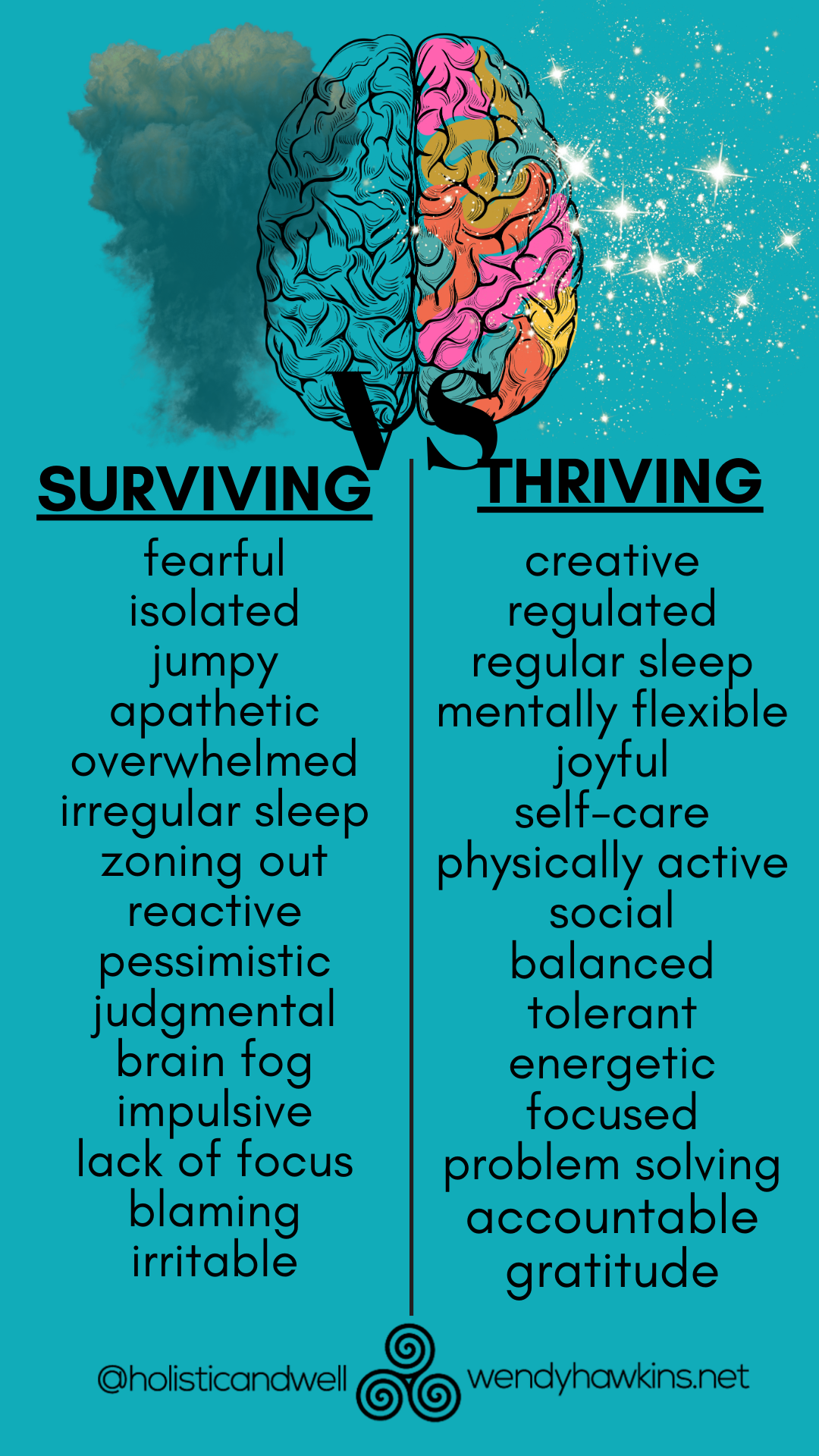
So over time, what does nervous system overload look like?
emotional exhaustion
irritability
sleep disruption
anxiety
concentration problems
emotional numbness
physical tension
digestive issues
burnout
chronic aches and pains
Are You Surviving or Thriving?
Practical Ways to Regulate the Nervous System
Let’s look at some easy and practical tools that can support nervous system stabilization in everyday life:
1. Delay Input in the Morning
Try avoiding social media or news consumption for the first 15–30 minutes after waking. Give your nervous system time to wake up before orienting to the world’s stress.
Go get a drink of water
Open the curtains and let the sun in
Stretch your body
Focus on gratitude and what feels good in your life
2. Practice “Body-Based” Grounding
Once you plug into the world and begin to feel overwhelmed, gently reconnect to physical sensation:
place both feet on the floor
soften your jaw
lengthen your exhale
notice three things you can physically see around you
Grounding helps communicate safety to the nervous system.
3. Create Information Boundaries
Being informed does not require constant exposure. Consider designated times for news or social media rather than continuous checking throughout the day.
Remove apps from your handheld devices to restrict ease of access
Take in small bits of information
Put yourself on a timer when consuming information
Ask yourself “why do I need to know this” before consuming
Curate and include more “positives” into your feed
4. Complete Stress Cycles
Stress hormones are designed to move through the body. Walking, stretching, shaking out tension, deep breathing, and even crying can help discharge accumulated activation.
Walking while reading or listening to media can help integrate emotions and thoughts together
Try and focus on your sphere of control only rather than trying to solve big world problems
Focus on gratitude and what IS working in your world today
5. Reintroduce Small Moments of Safety
Many people wait until they are “fully calm” to feel safe again. But does that ever really happen? Instead, focus on creating tiny moments of regulation:
warm tea
sunlight
music
connecting with a trusted person
petting an animal
mindful breathing
laughter
find spaces of joy
indulge in frequent expressions of creativity
Take Responsibility for Your Healing
In a world that profits from demanding your attention and promoting a constant sense of urgency with beeps, bells and buzzers, choosing to slow down is the ultimate act of nervous system care. Awareness matters. Intention matters. Staying informed matters. But so does protecting the part of yourself that still deserves rest, steadiness, and emotional safety.
Healing often happens through repetition, not intensity. I encourage clients to take just one small step initially and then do that one thing consistently for two weeks. It could be as simple as charging your phone overnight in another room so you don’t wake up to the notifications first thing in the morning. This provides a space of “success” and celebration that encourages the brain to keep going. Notice what happens and how you feel with that initial small step.
If you’d like to explore ways to begin thriving, please email me at info@wendyhawkins.net to schedule your 30-minute complimentary phone consultation to explore your healing journey. I also have a free Wellness Audit for you to download that will give you an idea of the areas of life you need to work on.
You’re in control of your mental wellness journey!
wh