
Understanding the inequities of mental health services for BIPOC: The first step for White Freedom Fighters

So July has been deemed “Minority Mental Health Awareness Month” but in my opinion this is information that everyone needs to discuss on a daily basis. Racial disparities within the mental health community are not a new concept. Black, indigenous and people of color (BIPOC) are much less likely to receive a high quality of care and more likely to abstain from receiving services all together due to the bias, bigotry, racism and unsafe space that a predominantly white mental health treatment culture continues to support. Implicit biases and negative assumptions that have been deeply rooted within our society regarding BIPOC persons continue to perpetuate stigmas and demonize those impacted most.
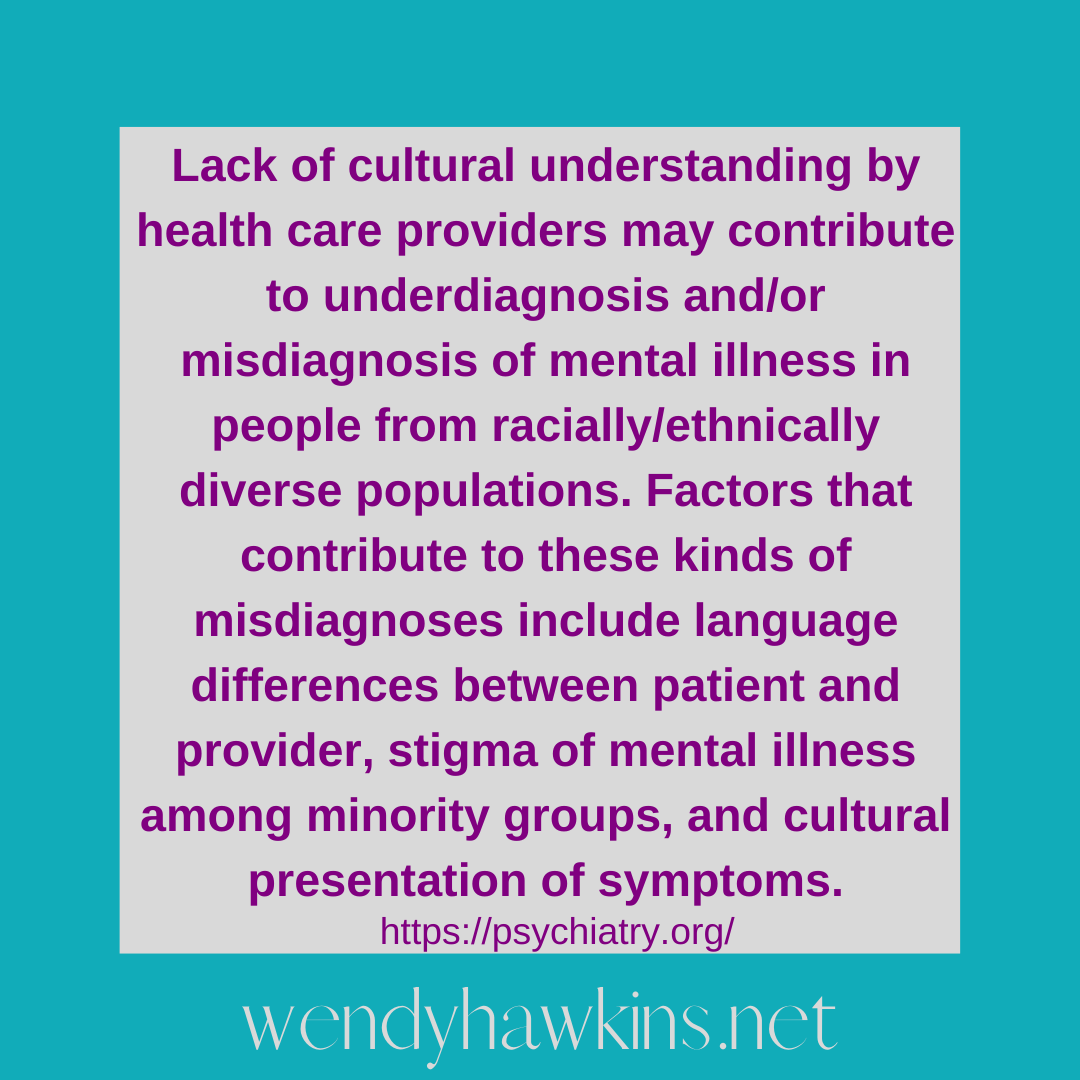
As we sit in the midway point of 2021, BIPOC continue to be less likely to seek out services or have access to providers they feel safe with. When treatment is provided, many times there is a poor quality of care due to prejudice and ignorance resulting in termination of service prematurely by the BIPOC client. I have seen this in action. My first years as a mental health provider were spent providing support to parents (primarily young women of color) and kids who had become involved within the state system for whatever reason. Most of the time their case workers were entry level social workers that were young, white women who had come from a rural community with skewed beliefs and concepts regarding BIPOC clients. Needless to say, that was an environment I didn’t do well in and decided to venture out on my own to support any client who trusted me enough to take a chance and begin the hard journey of healing.
Freedom Fighters not allies for BIPOC need to understand what steps to take within themselves, their families and communities to assist with not only closing the gap but getting rid of it all together when it comes to healing within a mental health context particular for the BIPOC community. As White people, here’s some things to think about:
BRING AWARENESS TO THE USE OF STIGMATIZING LANGUAGE
AROUND MENTAL ILLNESS
The Diagnostic and Statistical Manual (DSM) currently in its fifth edition was initially created in 1952 through the APA (American Psychological Association). It covered about 60 disorders theorized from abnormal psychology and psychopathology exhibited from those who were confined to mental hospitals and institutions decades prior to the conception. Considering these disorders were developed from the observation and research of primarily white males, the DSM is rooted in bias, biological inferiority concepts and racism. How do you think that impacts the care given to BIPOC clients?

One of the huge stigmas of mental health is the diagnosis that inevitably comes with making the first step towards getting support. Now don’t get me wrong, there are times that having a diagnosis (label) can be empowering and helpful but let’s not forget that “making a diagnosis” is an incredibly subjective process. I believe people who receive a diagnosis tend to subconsciously enmesh themselves with their diagnosis and it becomes part of their identity, so I don’t provide one unless a client asks me specifically to render my professional opinion. Because I only have private pay clients, I don’t have to answer to big pharma and insurance companies so I’m able to utilize this practice, although I know there are some of my colleagues that would fiercely disagree.
We’ve all heard “jokes” regarding people of color and “craziness”. Now more than ever it’s important to speak up within your circle. Speak up and educate those around you on how harmful and untrue those beliefs are and how they perpetuate a racist culture against BIPOC who may or may not have mental health obstacles. You’ll get pushback but it’s up to you to stand your ground and be the change you wish to see.
EDUCATE FAMILY, FRIENDS AND COLLEAGUES ABOUT THE UNIQUE CHALLENDGES OF MENTAL ILLNESS WITHIN BIPOC COMMUNITIES

I stay grounded in the philosophy to educate and empower others. No one is exempt and there’s always room to learn and grow. There are some great resources available that talk about mental health for marginalized communities as well as facts, research and places to find information. Here’s a few that I think are relevant:
Challenging Multicultural Disparities in Mental Health (NAMI)
Racial Disparities in Mental Health Treatment
American Counseling Association
We are not OK: Mental Health Resources for BIPOC Communities
12 Books on Behavioral Health Written by Black People
Racism and Health: A Reading List
60 Digital Resources for Mental Health
This of course is not an exhaustive list. If you have other resources, I would love to hear about them in the comments or send me a direct email sharing your source!
BE AWARE OF PERSONAL ATTITUDES AND BELIEFS REGARDING BIPOC MENTAL HEALTH TO REDUCE IMPLICIT BIAS AND NEGATIVE ASSUMPTIONS

Do the work! Do the work! Do the work!
Be aware of your personal beliefs and attitudes. A very simple way to get some insight to self is know your biases. We all have them. Harvard created a great resource that is free to use. Go and complete one or all fourteen of the exams. Getting to really know and understand yourself is essential in this process.
Educate and understand how the construct of racism was developed, executed and is maintained within our country. This is not an complete list but it’s a great place to start.
Understanding terminology of race and ethnicity is essential to discussing and debating within your circle. Be intentional about learning and evolving!
CONTINUE CONVERSATIONS
Once starting the very important work of personal evolution, it is equally important to begin and/or continue having difficult conversations within your circle as well as outside of it with people who cross your path. Here’s some suggestions by the American Negotiation Institute on how to get those important conversations going in a productive and assertive way:
What is your goal in having the conversation? Know your implicit biases. Don’t internalize or take things said personally.
Acknowledge and validate emotions of the other party. If you see emotions, then talk about them. Let the other person know you are seeking to understand and that you have compassion.
Ask open-ended questions with the desire to learn. Stay inquisitive and don’t make assumptions.
Utilize a problem solving framework as the mechanism for change. Collaborate with others for creative and alternative perspectives.
Shame and guilt do not provide a firm foundation for a productive conversation. These should never be used as most will take offense, clam up and get on the defensive. Instead use phrases like, “I feel”; “I have found” or “my understanding” to convey thoughts or confirm your understanding of a particular idea/topic.
FINAL THOUGHTS
I hate that we live in a society where we have to have specific awareness days/weeks/months to encourage individuals to think about hard subjects like mental health disparities within marginalized communities. But unfortunately this is where we are. I say all the time that this work is hard. If it were easy everyone would do it and all would be well and balanced in the world. However, we’re not there yet.
When I schedule a consultation with a new client, I encourage them to develop some questions they can ask regarding me, my philosophies and experiences as a clinician including my beliefs and values. I believe transparency is essential particularly when a White clinician is interviewed by a BIPOC for mental health services. Download my guide, Ten Questions to Ask During a New Therapist Consultation, that includes questions for BIPOC individuals as well as those within the queer community to get an idea of the person/providers they are contemplating working with.
The first step is self-awareness. Take time to sit by yourself, in the quiet, reflecting on the type of person you are versus who you want to be. Educate yourself. I’m always available for that complimentary 30-minute consultation to support you. Take care!
wh
RESOURCES:
“Racial Disparities in Mental Health Treatment”: https://online.simmons.edu/blog/racial-disparities-in-mental-health-treatment/
“Black/African American”: https://www.nami.org/Your-Journey/Identity-and-Cultural-Dimensions/Black-African-American
“The Role of Privileged Allies in the Struggle for Social Justice:: https://www.humanityinaction.org/knowledge_detail/jlf-16-the-role-of-privileged-allies-in-the-struggle-for-social-justice/
“Maybe it’s Time to Retire the Term White Ally”: https://marleyk.medium.com/maybe-its-time-to-retire-the-term-white-ally-438950dbe6e
“How Important is the Psychiatric Diagnosis?” https://www.psychologytoday.com/us/blog/the-couch/201907/how-important-is-psychiatric-diagnosis
“Mental Health Matters: 8 Stigmatizing Phrases to Stop Using”: https://www.goodtherapy.org/blog/mental-health-matters-8-stigmatizing-phrases-to-stop-using-050715
“Challenging Multicultural Disparities in Mental Health:” https://www.nami.org/blogs/nami-blog/july-2017/challenging-multicultural-disparities-in-mental-he